
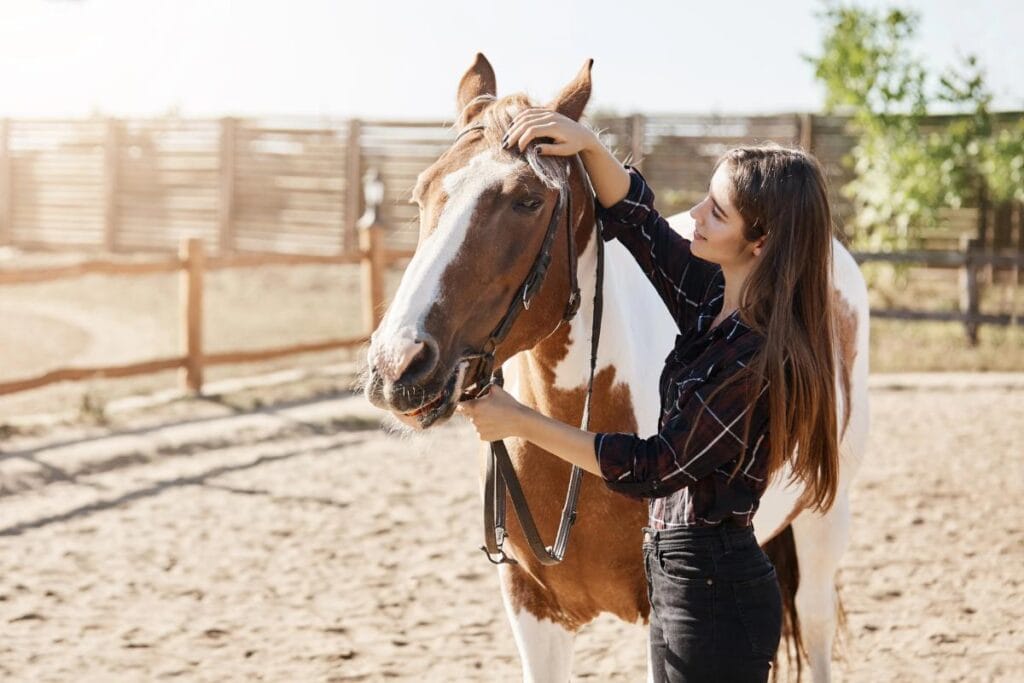
What should horse owners look for when subtle changes in appetite, behavior, or comfort could point to stomach ulcers? Stomach ulcers in horses can develop with signs that are easy to dismiss as changes in routine or personality. Reduced appetite, sensitivity around the girth, changes in behavior, and reluctance to work may all deserve closer attention, particularly when they persist or appear together.
Recognizing these early warning signs can help owners know when a veterinary evaluation may be appropriate and avoid overlooking a problem that could otherwise become more difficult to manage.
Just How Common Are Stomach Ulcers in Horses?
Before getting into the specific signs, it helps to understand the scale of the problem. According to UC Davis’s Center for Equine Health, a horse’s stomach produces acid continuously, up to nine gallons of acidic fluid per day, even when the horse isn’t eating at all. That constant acid production is exactly why gastric ulcers are so common, with prevalence estimated between 50 and 90% of horses, and the majority of affected horses showing no obvious outward signs at all.
That’s a genuinely striking figure, and it explains why so many owners don’t think to check for ulcers until symptoms have already progressed considerably.
7 Signs Your Horse May Have Stomach Ulcers
Given how often ulcers go unnoticed until they’re fairly advanced, it helps to know exactly what to watch for. Here are the seven signs most consistently linked to gastric ulcers in horses.
1. Poor Appetite or Picky Eating
A horse that starts leaving grain unfinished or becomes noticeably more selective about meals may be experiencing discomfort associated with gastric ulcers. This can be one of the earlier signs, particularly when the change is persistent rather than a one-off refusal.
Pay attention to whether the horse takes longer to finish meals, loses interest in certain feeds, or shows a clear change from its normal eating habits. While picky eating alone cannot confirm ulcers, a consistent change in appetite is worth discussing with a veterinarian.
2. Weight Loss or Poor Body Condition
Weight loss can follow directly from reduced appetite, but it can also result from decreased nutrient absorption in more severe cases, since damage to the stomach or intestinal lining interferes with how well a horse actually processes what it eats.
Watch for more prominent ribs, muscle loss over the topline, or a generally unthrifty appearance that develops without any change in feeding.
3. Dull or Coarse Coat
A once-shiny coat that has lost its usual luster or become noticeably rougher can sometimes reflect changes happening internally. Coat condition is influenced by nutrition, digestion, overall health, and how well a horse is using the nutrients it receives.
A dull coat on its own does not confirm stomach ulcers, since many other factors can affect coat quality. However, when it appears alongside changes in appetite, weight, behavior, or performance, it is worth paying closer attention rather than treating it as a purely cosmetic issue.
4. Girthiness or Sensitivity When Tacking Up
- Pinning ears or tensing up when the girth is tightened
- Shifting weight or stepping away during grooming
- General resistance to being saddled that wasn’t present before
These behaviors are frequently linked to abdominal discomfort, and while girthiness can have other causes, it’s a pattern worth taking seriously rather than assuming it’s simply attitude.
5. Recurrent Mild Colic
This is really what makes ulcers difficult to identify: the signs do not always point in the same direction. Some horses may experience recurring, mild colic episodes rather than one obvious emergency. Repeated episodes deserve attention because they can sometimes be associated with underlying gastric ulcers.
Many owners find that once they start looking closer at stomach ulcers in horses, the pattern behind these repeat episodes suddenly makes a lot more sense, and small changes they had brushed off start to feel connected. Mad Barn is a trusted name in equine health, offering practical resources that help owners understand these warning signs and know when a veterinary assessment may be a good idea.
6. Behavioral Changes
A horse that seems more irritable, nervous, or aggressive than usual, particularly around feeding time, may be communicating discomfort rather than simply having a difficult day. Watch for:
- Increased aggression toward other horses, especially near the feed bucket
- Pawing or kicking at stall walls
- A generally grumpier or more anxious demeanor under saddle or with handlers
7. Teeth Grinding, Excessive Drooling, or Cribbing
Teeth grinding, excessive drooling, and changes in cribbing behavior can sometimes be associated with gastric discomfort, particularly in foals. These signs are not specific to ulcers and may have several other causes, but a new behavior or noticeable increase in frequency deserves attention.
If these changes appear alongside poor appetite, weight loss, sensitivity, or performance issues, they can provide useful context for your veterinarian when assessing the horse’s overall health.
What to Do If You Notice These Signs
Because ulcer symptoms can be subtle, it is worth paying attention when several changes appear together. If you notice anything unusual:
- Track the changes: Note appetite, behavior, weight, and performance.
- Watch for patterns: Look for changes around feeding or exercise.
- Speak with your veterinarian: They can determine whether further evaluation is needed.
- Consider gastroscopy: This remains the definitive way to diagnose gastric ulcers.
Early attention can make a difference. Recognizing small changes and discussing them with your veterinarian is far better than waiting for symptoms to become more pronounced.
Conclusion
Stomach ulcers in horses rarely announce themselves with one clear, unmistakable symptom. They tend to show up quietly, through a pickier eater, a slightly duller coat, a bit more sensitivity at the girth, exactly the kind of changes that are easy to explain away individually.
Given how common this condition actually is, affecting anywhere from half to the vast majority of horses depending on their workload and lifestyle, taking these seven signs seriously rather than assuming they’ll resolve on their own is one of the most valuable things an owner can do. Catching ulcers early, before they progress into something more painful and harder to treat, almost always means a simpler, faster path back to full comfort for your horse.