
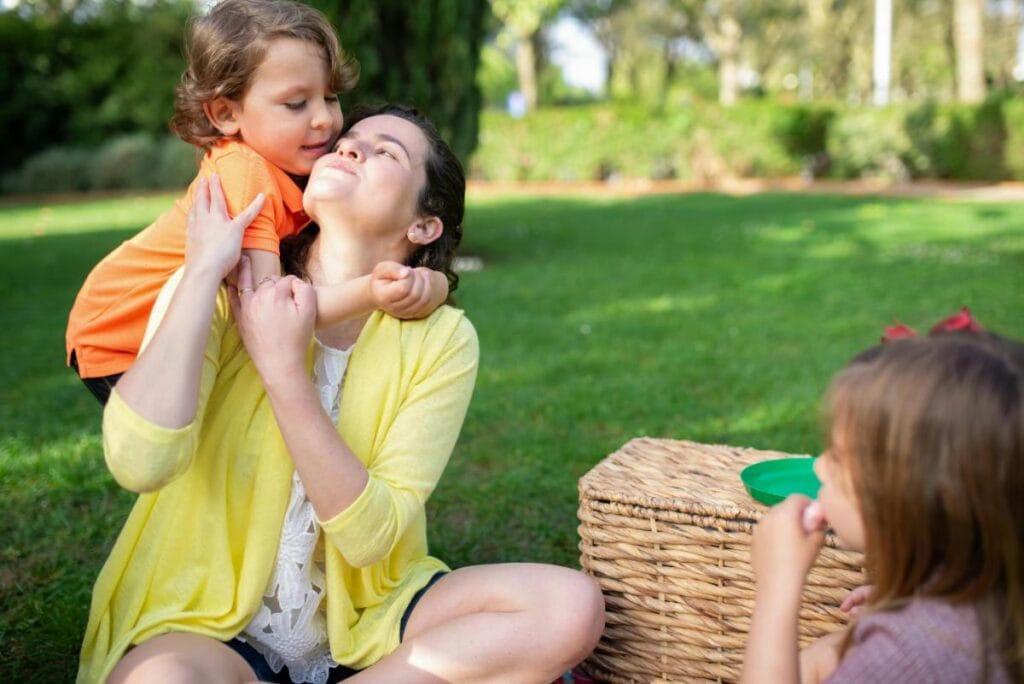
Screens have quietly become the background of many family afternoons. Toddlers tap away on tablets, older kids drift toward games or videos, and parents scroll while meals cool on the table. Even when families are together in the same room, attention often feels scattered.
Too much screen time can take a toll. Eye strain, low energy, and fewer real conversations are common concerns for parents. Physical movement and shared problem solving tend to fade into the background. Over time, it becomes harder to create moments that feel genuinely connected.
Hands-on activities offer a practical reset. They do not require expensive tools or perfect planning. What they offer instead is shared focus. When families work with their hands, conversations happen naturally and time slows down in a way screens rarely allow.
Building with LEGO Bricks
Many families already have LEGO bricks tucked away in a cupboard or storage bin. Building together creates a calm, focused activity that encourages cooperation and creativity. Parents and kids can sit at the same table, talk through ideas, and work toward a shared goal without pressure.
Building sessions do not need instructions or finished models to be successful. A pile of mixed bricks is often enough. Kids practice planning, problem solving, and patience as they test ideas and adjust when things do not work. Adults often find the process surprisingly relaxing, especially when they join in rather than supervise.
Some families look online for inspiration from builder showcases such as lego brisbane, which functions as a visual gallery of creative builds rather than a step by step guide. Using inspiration rather than instructions keeps the focus on imagination and teamwork, not comparison.
Finishing a build together gives everyone a sense of shared accomplishment. It reinforces the idea that effort matters more than perfection and that collaboration can be enjoyable.
Baking Together
Baking is a simple way to bring everyone into the kitchen without the stress of preparing a full meal. Measuring flour, mixing batter, and decorating treats are hands on tasks that children can manage with light guidance.
The pace of baking encourages patience. Waiting for dough to rise or cookies to cool creates natural pauses for conversation. These quiet moments often lead to meaningful talks that feel unforced.
Baking also helps children understand where food comes from. Instead of seeing meals as something that simply appears, they begin to recognize the steps involved. This builds confidence and a sense of contribution. Even small tasks like cracking eggs or stirring batter can feel important.
Sharing what you bake reinforces teamwork. Everyone enjoys the result, and the effort feels collective rather than individual.
DIY Crafts
Craft projects do not need special supplies. Paper, glue, scissors, and markers are enough to get started. Families can turn everyday materials into cards, decorations, or imaginative creations using what they already have.
Crafting allows everyone to work at their own pace while still sitting together. Some children enjoy detailed projects, while others prefer quick and playful designs. There is no single right way to create, which helps kids feel comfortable experimenting.
Parents do not need artistic skills for this to be meaningful. Simple folding, coloring, or cutting activities still encourage focus and creativity. Finished crafts often become keepsakes that quietly mark time spent together.
Garden Time
Spending time outside provides a break from screens and a change of rhythm. A large yard is not required. Pots on a patio, balcony, or windowsill are enough to grow herbs, flowers, or small vegetables.
Gardening introduces responsibility in a gentle way. Children enjoy watering plants, checking for new growth, and seeing progress over time. These small routines build patience and awareness of the natural world.
For parents, garden time often feels grounding. It creates a shared project that unfolds slowly and rewards consistency rather than speed. Watching something grow together strengthens a sense of connection and care.
Board Games or Card Games
Board games and card games remain one of the easiest ways to gather everyone around a table. They require little setup and work well for a wide range of ages.
Younger children benefit from simple matching or counting games, while older kids may enjoy strategy based options. Parents can help explain rules without turning the activity into a lesson. The focus stays on participation and enjoyment.
Games naturally teach life skills. Taking turns, handling disappointment, and celebrating others are all part of play. These lessons tend to stick because they are learned through experience rather than instruction.
Wrap Up
Screens are part of modern life, but they do not need to define every family afternoon. Hands-on activities create space for conversation, cooperation, and shared focus. These moments may seem small, but they build habits that strengthen family connections over time. In a busy world, choosing to slow down together can make all the difference.