
Summer break can feel like an endless stretch of sun-soaked freedom, both for kids and for parents trying to keep everyone occupied. The upside? When the school bell stops ringing, daily schedules loosen just enough to weave life-skills training into the mix. Less homework means extra hours to practice real-world habits, and the relaxed vibe gives children space to try, stumble, and master new tasks before next September. Studies show that time spent on chores during childhood predicts stronger work ethic and richer relationships decades later, underlining the long-term payoff of this seasonal window.
Why summer is the sweet spot:
- Room in the day. With classes on hold, kids have mental bandwidth to focus on practical skills rather than spelling tests. Parenting experts note that unstructured time is ideal for habit-building because the stakes and the stress are lower.
- A softer pace. Without nightly homework deadlines, parents can slow down and model each step – whether that’s folding towels or sautéing veggies without everyone watching the clock.
- A head start on independence. By fall, children who’ve spent eight to ten weeks practicing chores often walk into the new school year more organized and self-assured.
Matching chores to ages (so they actually stick)
Toddlers (around 2–3). Keep it tiny and concrete. Ask them to scoop kibble into the dog’s bowl or drop blocks into a toy bin. Finishing in seconds lets them feel instant success, which fuels the “Let me do it!” stage.
Early school-age kids (4–7). Graduate to repetitive, visible tasks. Setting napkins and forks for dinner or watering a patio plant shows quick, tangible results, helping the routine lodge in their memory.
Tweens (8–12). They crave real autonomy, so hand over chores with obvious grown-up value – prepping simple breakfasts, sweeping shared spaces, or packing their own camp lunch. Each job says, “You can handle this,” and they rise to meet it.
Teens (13 and up). Shift to life-skill territory: planning one family dinner a week, running the washer and dryer start-to-finish, changing a light fixture bulb, or tightening a door hinge. These responsibilities mirror adult tasks and make the leap to independence feel natural.
The American Academy of Pediatrics advises letting children graduate to the next chore tier as soon as they show consistency not perfection on the current one.
Turning “ugh” into “game on”
Gamification isn’t just for math apps. Researchers tracking family-chore apps found that points, badges, and leveling up can double follow-through when the rewards feel achievable and the rules are clear.
- Chore bingo. Print a 5×5 grid of small tasks. When a row is complete, kids pick the next family movie or choose Saturday breakfast.
- Beat-the-clock. Set a ten-minute timer and see who can put away the most toys or pair the most socks before the buzzer.
- Leveling up. After five days of successful table-setting, a child “unlocks” the chance to cook a simple side dish – an upgrade many children treat like a badge of honor.
- Traveling trophy. A silly hat or stuffed mascot lives with the chore champion of the day, generating gentle competition without cash payouts.
Building real confidence, not just compliance
Chores matter less for what gets cleaned than for what gets learned. Kids absorb three key lessons:
- Competence. “I can learn hard things.”
- Contribution. “My efforts matter to the family.”
- Control. “I have agency over my environment.”
Those pillars mirror Self-Determination Theory’s recipe for intrinsic motivation, which is why children who help at home often show higher classroom engagement down the line.
Practical tips for parents
- Start with a demo, end with a debrief. Show once, let them try, then talk through what worked.
- Use real tools. A child-sized broom is better than Mom’s oversized one – but it should actually sweep, not just look cute.
- Expect imperfection. The goal is ownership, not hotel-level corners on the bedspread.
- Anchor chores to existing routines. Feed the cat right after breakfast; fold laundry during a favorite podcast. Habits glued to cues stick longer.
- Celebrate progress out loud. A quick “I noticed you remembered the plants without a reminder – nice job” reinforces the behavior far better than generic praise.
Building ownership through daily routines
Morning
- Make the bed (covers pulled up, pillow in place)
- Prep a simple breakfast – pour cereal, scramble an egg, or toast bread
- Brush + floss teeth without reminders
Afternoon
- Tidy play area or sports gear as soon as playtime ends.
- Fix a healthy snack (yogurt + fruit, veggie sticks with hummus).
Evening
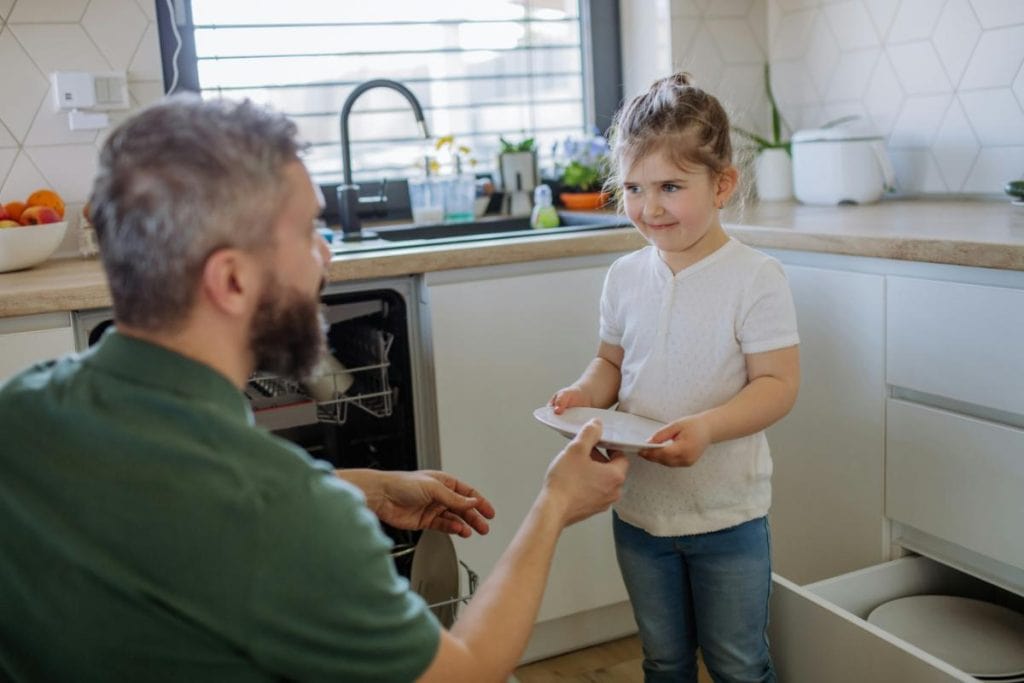
- Clear plates, rinse, and stack in the dishwasher.
- Lay out tomorrow’s outfit, backpack, and water bottle.
Ownership tip
- Assign each child a “slice” of the day, e.g., Breakfast Boss or Evening Organizer, so the routine feels like theirs, not yours.
- Move a child up to the next tier once they show consistency not perfection at their current level, and always model the chore first before letting them take the reins.
Confidence in the kitchen and laundry room
- Teach one go-to snack or lunch (peanut-butter banana wrap, cheese quesadilla)
- Let kids load the dishwasher, add the pod, and choose the cycle
- Walk through laundry basics: sort lights/darks, measure detergent, pick water temp and spin speed
- Explain appliance settings in kid-friendly terms: “cold saves colors,” “delicate spins slower”.
- Rotate weekly titles Laundry Captain or Kitchen Helper to give every child a turn running the show and feeling trusted.
- Teaching appliance use early also builds long-term awareness about safety and maintenance. As noted by experts at Best Solution Appliance Repair, even simple tasks like cleaning filters or loading properly can prevent damage and keep machines running longer – lessons kids can carry into adulthood.
Helping hands for pets and plants
- Feed & water tracker
Hang a simple weekly chart with pet-bowl and watering-can icons; kids tick a box or add a sticker after each job. - Grooming checklist
Once a week, they brush fur from neck to tail and do a quick “ears-eyes-paws” look-over empathy in five minutes. - Plant patrol
Assign a houseplant or herb pot; the “keeper” does the finger-in-soil test and waters when it feels dry. - DIY job tags
Let kids craft name badges like Garden Guardian or Kibble Captain and pin them to the fridge for instant ownership.n
Celebrate wins and build a feedback loop
- Weekly shout-outs
During Sunday dinner, highlight one effort—“Lena never missed Basil’s breakfast all week.” - Feel-good reflection
Ask, “Did caring for the jade plant make you feel more grown-up?” Linking action to pride beats generic praise. - Adjust & level up
When a task is easy, add a twist: measuring wet food, pruning dead leaves, or timing dishwasher cycles. - Mini graduations
Mark new responsibilities with a small perk, a homemade certificate or choosing dessert so progress feels real.
Clear cues, real ownership, short feedback loops: that trio turns everyday pet-care and plant-care into confidence training. A summer of tiny checkmarks on a chore chart and thoughtful shout-outs plants lifelong seeds of responsibility.