
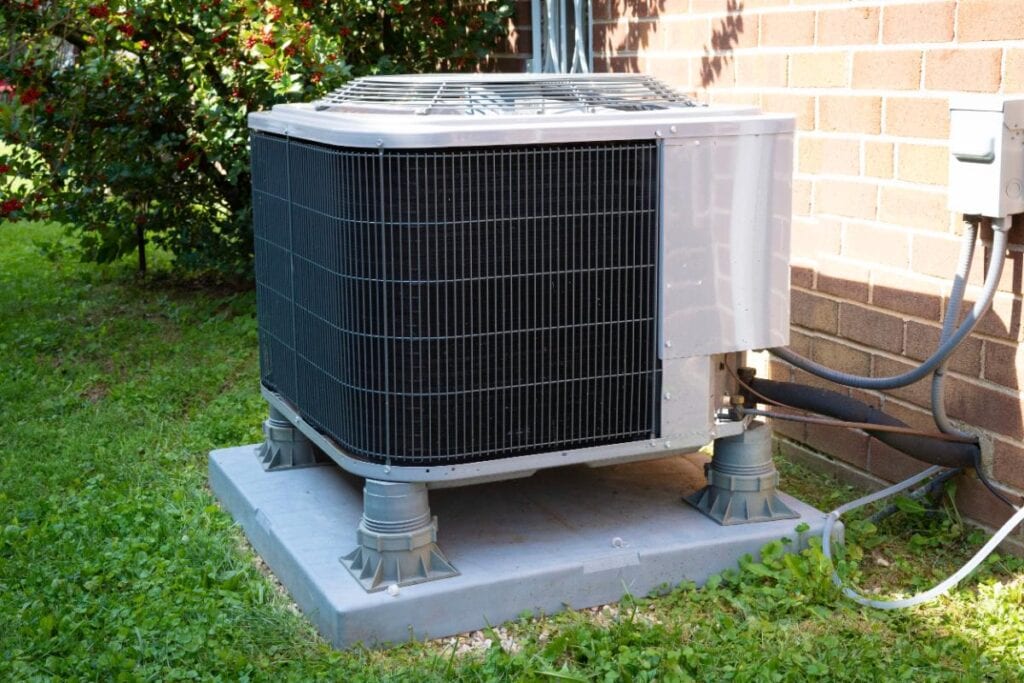
Fifteen years. That’s the number most homeowners throw around when they talk about furnace and air conditioner lifespans. But here’s the thing: fifteen years is a rough average, not a promise. Some systems limp along for twenty-five. Others quit at year nine with a groan and a puff of smoke. The difference usually comes down to three things: what you bought, how it was installed, and whether you treat it like a piece of machinery or a living thing that needs care.
This guide walks you through realistic lifespans by equipment type, the warning signs that your system is on its last legs, and the habits that actually add years to the clock. No vague “call a professional” filler. Just straight talk about how long your equipment should hold up, and what to do when it starts to slip.
What’s the Real Lifespan for Each Piece of Equipment?
People ask “how long does an HVAC system last” as if every furnace and air conditioner rolled off the same assembly line with the same expiration date. They don’t. Different equipment handles different workloads, and their expected lifespans reflect that. The table below gives you the honest ranges based on typical residential use in a four-season climate like the Midwest.
| Equipment Type | Typical Lifespan | Biggest Wear Factor |
|---|---|---|
| Gas Furnace | 15 to 20 years | Heat exchanger cycling and burner corrosion |
| Heat Pump | 10 to 15 years | Running nearly year-round for heating and cooling |
| Central Air Conditioner | 10 to 15 years | Compressor strain during peak summer heat |
| Ductless Mini Split | 12 to 15 years | Filter buildup on indoor wall units |
| Boiler | 15 to 30 years | Water quality and pressure management |
Notice the spread on boilers. Thirty years is realistic if you flush the system and keep the pressure steady. Heat pumps sit on the shorter end because they work twice as hard, running in both winter and summer. That’s not a knock on the technology. It’s just physics, and you should budget accordingly when you plan for a complete HVAC system installation so the cost doesn’t blindside you a decade down the road.
Another factor worth naming: your regional climate. A heat pump in Minnesota cycles far more aggressively than one in North Carolina. According to baseline efficiency guidance from the U.S. Department of Energy, heating and cooling eats up roughly half of a typical home’s energy bill, which means your equipment logs serious hours. The more hours it logs, the sooner parts wear out. Plain math, no way around it.
Why Did My Neighbor’s System Last Longer Than Mine?
You’ve heard the story. Your neighbor installed the same brand of furnace the same year you did, and theirs still runs like a sewing machine while yours sounds like a coffee grinder. Frustrating, right? The gap rarely comes down to luck. It comes down to three installation and maintenance decisions that play out over a decade.
- First, sizing matters more than brand. An oversized furnace short-cycles, turning on and off constantly and wearing out the blower motor. An undersized one runs nonstop, overheating the heat exchanger. Both kill efficiency and shorten lifespan. The fix is a Manual J load calculation, a detailed heat-loss and heat-gain assessment that tells the contractor exactly what size system your house needs. Skip that step and you’re gambling with your equipment’s future.
- Second, the ductwork has to match. You can bolt a brand-new high-efficiency furnace onto thirty-year-old ducts full of holes and kinks. It’ll work, technically. But the airflow restrictions force the blower to strain, static pressure climbs, and the heat exchanger runs hotter than it should. If you’re planning an hvac system installation or a replacement, ask the contractor to inspect the ductwork first. Sealing and rebalancing ducts is boring work, but it’s the difference between a system that lasts fifteen years and one that barely makes it to ten.
- Third, maintenance is not optional, it’s the contract. The manufacturers build these machines to run for years with basic care. They also build them to fail early when neglected. Two visits a year, one before heating season and one before cooling season, catches the small problems while they’re still cheap. The U.S. Environmental Protection Agency has long promoted regular tune-ups as the single best way to keep cooling equipment running at peak efficiency, and that holds true on the heating side too.
The Signs Your System Is Nearing the End
You don’t need a technician to tell you the system is struggling. You just need to pay attention to what it’s telling you. Here are the signals that retirement is close, not just a rough patch.
- Age plus repair frequency. The golden rule in the trade: if the system is past its expected lifespan and repairs cost more than 30 percent of a replacement, stop pouring money into it. That’s basic math, not a marketing trick.
- Rising energy bills with no other explanation. Your rates didn’t change. Your thermostat settings didn’t change. But your bills crept up 20 percent year over year. That’s the system losing efficiency as components degrade.
- Uneven temperatures. One room sweats while the other freezes. This points to duct problems or a blower that’s losing its ability to distribute air, both expensive to chase on an aging system.
- Strange noises. Banging, squealing, or rumbling sounds mean moving parts are failing. Sometimes it’s a cheap belt. Sometimes it’s the compressor saying goodbye.
- Frequent breakdowns. Two or three service calls in a single season is not a bad streak. It’s a pattern, and the pattern is telling you the system has lost its reliability.
Got to three of these? Start shopping. Not because the system won’t run tomorrow, but because you want to replace it on your timeline, not in an emergency during a January freeze or an August heat wave. Emergency replacements always cost more, both in equipment markups and in the limited availability of contractors.
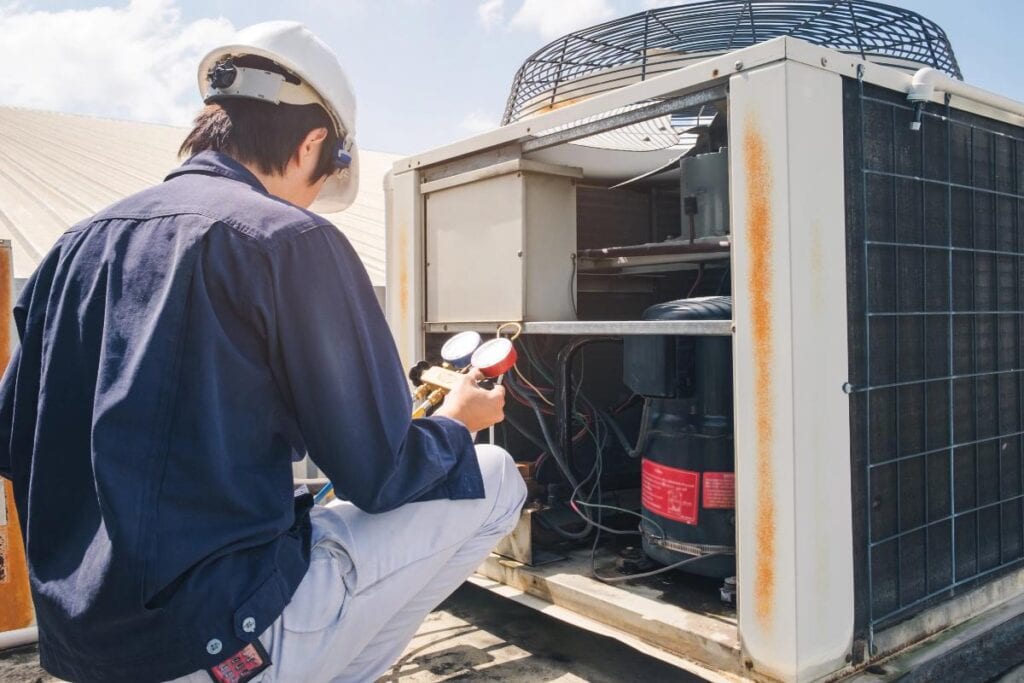
The Age of the Refrigerant Is a Hidden Clock
Here’s a factor most homeowners never consider: the refrigerant your air conditioner uses has its own regulatory timeline. R-22, the standard refrigerant for decades, is being phased out entirely due to its ozone-depleting properties. The ASHRAE standards that govern the industry now point clearly toward low-GWP refrigerants, meaning the new generation of equipment uses R-410A and newer blends.
Why does this matter to you? If your AC runs on R-22 and it develops a leak, the repair gets expensive fast. The remaining R-22 supply shrinks every year, and prices climb with it. A system that’s fifteen years old, already at the edge of its lifespan, and leaking expensive refrigerant is not a repair candidate. It’s a replacement waiting to happen.
That’s one reason the decision to upgrade often gets made for you. A technician finds a leak, quotes you $800 for refrigerant that might cost half that for the newer stuff, and suddenly the conversation shifts from “can you fix it” to “what does a new system cost.” Have that conversation on purpose, before the leak forces it.
A Smarter Way to Time Your Replacement
So here’s the practical playbook I’d hand to any homeowner trying to make this call. It’s not a single magic number. It’s a sequence of honest assessments you run every couple of years once the system passes the decade mark.
- Step one: track your baseline. Write down what you typically spend on energy per month in peak season. Not from memory, from your actual bills. You need a reference point or you’ll never notice the creep.
- Step two: log every repair. Keep a running tally of what you paid and what broke. After two years, you’ll see the trend line clearly. One $300 repair is an annoyance. Three $300 repairs in eighteen months is a signal.
- Step three: check the warranty coverage. Most new systems carry a ten-year parts warranty if you register them. If your system is past that coverage, you’re bearing every failure cost yourself, and the risk profile shifts.
- Step four: get a second opinion on any major repair quote. If the first technician says “replace it,” get another set of eyes. Good contractors honestly evaluate borderline systems, but you deserve more than one professional perspective on a multithousand-dollar decision.
- Step five: replace on your schedule, not the system’s. When you’ve hit the age range, logged the frequent repairs, and watched the efficiency slide, make the call. Pick the offseason, schedule the work, compare quotes in a calm frame of mind.
Making the New System Last Its Full Term
Once you finally pull the trigger, you can protect that investment. New equipment is only as good as the habits that follow it. Change the air filter every one to three months, depending on your household, pets, and allergies. Schedule the seasonal tune-ups without skipping a year. Seal the ductwork and add insulation so the new system isn’t fighting the house itself.
And keep the paperwork. Serial numbers, model numbers, warranty documents, and the install date. That file will save you hours of frustration when you call for service years from now.
The real secret to a long-lived system isn’t buying the most expensive brand on the showroom floor. It’s buying the right size, installing it on sound ductwork, and treating maintenance like a non-negotiable appointment. Do those three things and you’ll get every year the manufacturer designed into the machine, and probably a few bonus ones.
Your system will tell you when it’s done. The question is whether you’re listening before the emergency hits.