
Math often gets a bad reputation among students of all ages. Complex numbers and abstract formulas can turn routine homework sessions into stressful events for many families.
Turning numbers into something approachable takes a simple shift in perspective. Simple adjustments in daily study habits can rebuild academic confidence quickly.

Build Strong Foundational Basics First
Advanced math topics rely heavily on basic arithmetic and core principles. Skipping foundational steps makes later topics feel far more confusing than necessary. A solid grasp of addition, subtraction, multiplication, and division creates a steady path forward.
Students who spend time reinforcing core rules experience less stress when tackling algebra. Working through basic speed drills for 10 minutes a day strengthens memory retention. Research indicates that structured practice reduces subject stress in over 60% of elementary and middle school students.
Mastering primary steps gives learners the tools needed for harder topics. Confidence grows naturally when basic arithmetic feels automatic rather than difficult. Establishing this solid base ensures future lessons feel manageable.
Connect Math Concepts to Real Life
Abstract concepts become clear when tied to daily routines and real-world situations. Measuring ingredients during baking offers a practical view of fractions and ratios. Calculating discounts during grocery shopping turns mental calculations into useful everyday skills.
Many families find success by adding tailored academic guidance into weekly routines. Enrolling in remote 1-1 tutoring programs allows students to connect abstract theories with guided instruction. Personalized attention helps learners apply theoretical ideas to practical situations.
Seeing practical applications turns dry formulas into useful knowledge. Students retain information far better when they see why numbers matter outside the classroom. Relating lessons to personal interests makes daily practice far more engaging.
Reframe Mistakes as Learning Steps
Fear of getting wrong answers often creates a huge barrier to progress. Viewing wrong steps as valuable feedback lowers anxiety and encourages exploration. Early interventions that frame problem-solving as a growth mindset activity decrease subject stress significantly.
Analyzing incorrect answers shows where a misunderstanding occurred in the process. Correcting single steps builds deeper comprehension than simply copying a correct final answer. Overcoming small errors instills patience when tackling multi-step problems.
Classrooms and home study spaces that embrace errors build open discussions among learners. Students feel comfortable asking questions when failure is treated as part of learning. Embracing challenges leads to long-term academic resilience.
Integrate Visual Modeling Tools
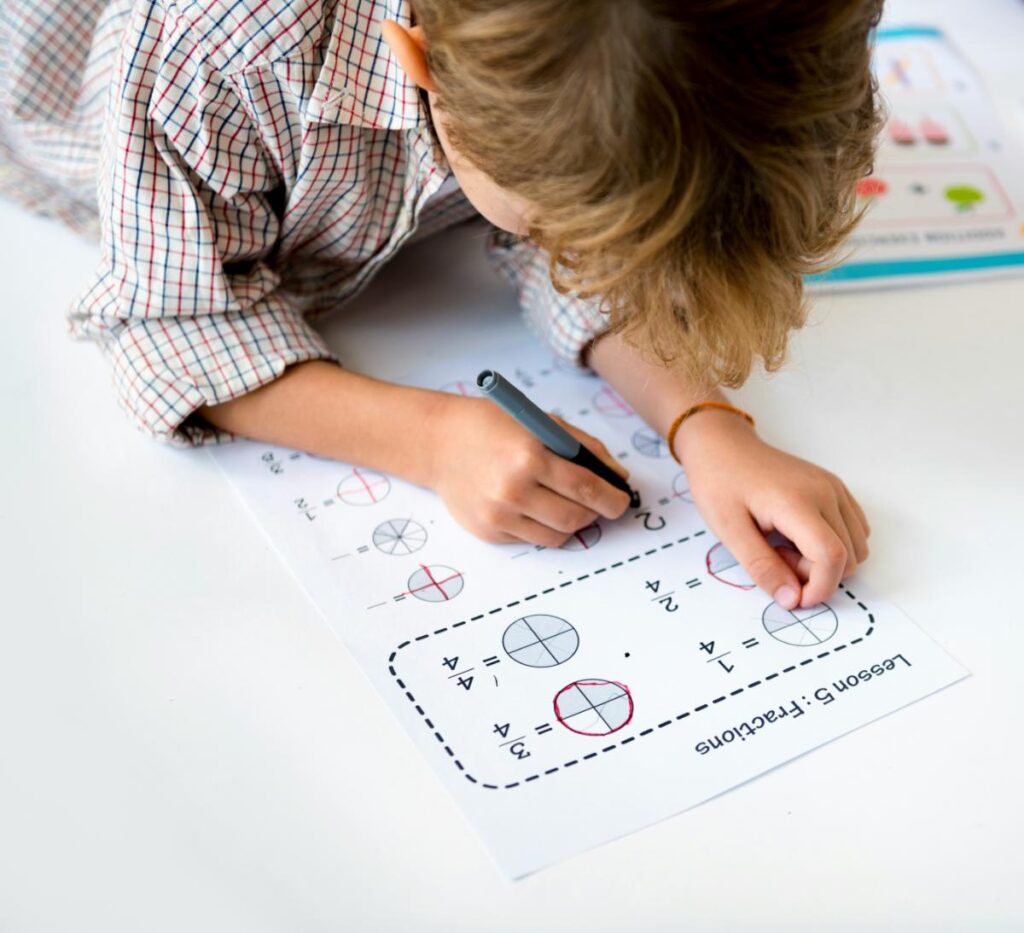
Textbooks filled with dense numbers can intimidate visual learners. Diagrams, pie charts, and geometry blocks turn abstract concepts into tangible visual items. Visualizing fraction bars helps students understand division concepts without relying on pure memory.
Educational studies show that visual modeling increases student engagement in mathematics by 45%. Drawing diagrams allows learners to organize complex problem details before solving them. Visual aids convert abstract numbers into clear graphic representations.
Here are 3 visual strategies that simplify abstract equations:
- Pie charts for visualizing fractions and percentages
- Number lines for mastering negative integer operations
- Geometric block sets for understanding volume and area calculations
Using visual methods bridges the gap between symbols and concepts. Learners grasp relationships faster when they see representations of numeric values. Graphic tools provide clarity during tricky problem-solving sessions.
Use Gamified Learning Strategies
Turning study routines into interactive games transforms frustration into fun. Digital games turn repetitive practice problems into entertaining challenges with rewards. Friendly competitions encourage regular practice without creating overwhelming academic pressure.
A leading education publication noted that gamified math tools lead to a 35% improvement in test scores among struggling learners. Earning points and passing game levels gives immediate positive reinforcement. Video game mechanics encourage students to keep trying until they succeed.
Interactive platforms adapt to individual skill levels automatically. Children progress through challenging topics and feel like they are playing a video game. Gamification transforms routine homework into an exciting daily challenge.
Break Down Complex Equations
Large word problems often look intimidating at first glance. Breaking multi-step tasks into smaller chunks makes them much easier to manage. Isolating individual numbers helps clarify what the problem actually asks.
Writing down step-by-step instructions keeps calculations organized on paper. Marking off completed sections gives a sense of steady momentum. Neat notes prevent silly errors caused by disorganized handwriting.
Interactive problem-solving approaches support higher conceptual understanding compared to traditional rote memorization. Working through smaller logical steps prevents feeling overwhelmed by multi-step algebra. Tackling one piece at a time builds momentum toward the final answer.
Establish Consistent Daily Practice
Studying numbers for 15 minutes daily works better than cramming for 3 hours before an exam. Short daily sessions keep formulas fresh in memory without causing mental fatigue. Consistent repetition builds long-term retention and reduces test night panic.
Setting up a dedicated study space keeps distractions to a minimum. Maintaining a predictable routine forms strong study habits that persist through high school. Short breaks keep focus high during study sessions.
Here are 3 daily habits that build long-term confidence:
- Reviewing 5 practice problems every afternoon after class
- Writing down key formulas on index cards for quick checks
- Explaining solved problems aloud to a parent or peer
Daily effort makes complex formulas feel familiar with experience. Regular exposure builds comfort with difficult academic topics. Steady practice transforms unfamiliar topics into manageable skills.

Create Interactive Study Environments
Studying alone in silence can make difficult homework feel tedious. Study groups let students explain concepts to peers in their own words. Group discussions reveal different methods for solving identical problems.
Explaining a concept to someone else tests your own mastery of the topic. Hearing peers share alternative solutions opens new ways to approach difficult assignments. Group study sessions keep motivation high during long homework evenings.
Collaborative learning removes the isolation that often accompanies STEM studies. Working together builds teamwork skills alongside numeric literacy. Supportive peer groups make academic challenges feel manageable.
Seek Personalized Academic Support
Struggling with homework without guidance can stall academic growth. Tailored individual instruction helps students regain confidence in challenging subjects up to 2 times faster than standard classroom settings. Targeted instruction addresses personal weak points directly.
High-dosage individual tutoring remains one of the most effective interventions for accelerating subject achievement. Mentors adapt teaching styles to match how each student learns best. Continuous feedback helps clear up confusion before exams.
One-on-one guidance creates a safe space to ask questions without peer judgment. Immediate feedback stops bad habits before they become ingrained patterns. Personalized support turns academic struggles into lasting success.
Making math enjoyable comes down to choosing effective study methods and building confidence step by step. Transforming frustrating assignments into engaging activities changes how students view numbers entirely.
With regular practice, visual tools, and proper guidance, any learner can master difficult concepts. Success starts with a single step toward positive study habits.