
A backyard pool should not turn every sunny weekend into a maintenance shift. Yet leaves, sunscreen residue, dirt and equipment checks tend to arrive together, especially when people are swimming regularly. The solution is not to skip essential tasks or buy every automated gadget available. It is to work out which jobs must be done by a person, which can be grouped into a routine and which are suitable for equipment. For Australian households balancing work, family and summer plans, a realistic pool-care system should make the week simpler while keeping water quality and safety firmly on the agenda.
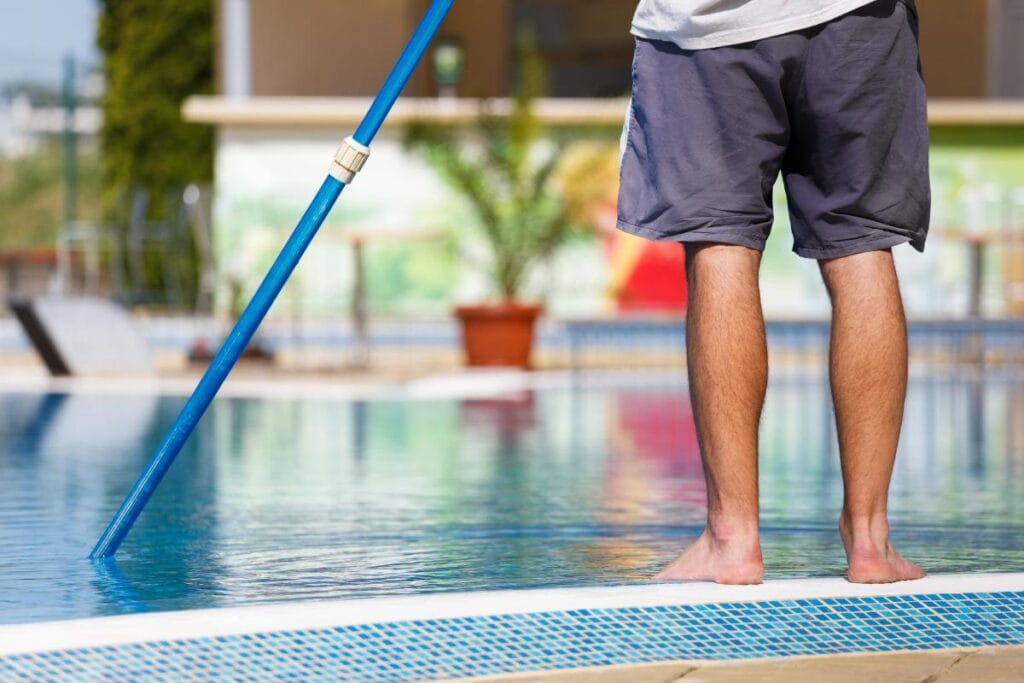
Find out where the maintenance time is going
For seven days, write down every pool task you perform. Record how often you skim floating leaves, vacuum settled debris, brush the waterline, empty baskets, test water and handle the cleaning equipment. You do not need a stopwatch or an app; an ordinary note with the task and day is sufficient.
At the end of the week, divide the tasks into categories. Water-quality testing, chemical treatment and safety inspections are responsibilities that require suitable human attention. Physical removal of leaves or grit may be partly automated. Some jobs, such as repairing a pump or electrical equipment, belong with an appropriately qualified professional.
This simple exercise helps avoid buying the wrong solution. A robotic pool cleaner capable of cleaning the pool floor will not remove the need to investigate cloudy water. A device with active water-surface collection may be more relevant to a pool beneath trees than a unit offering extra settings for an already clean floor.
Set up a repeatable weekly rhythm
Quick checks before swimming
Check water clarity and test chemistry as required by local public-health recommendations, particularly during warm weather and periods of frequent use. Inspect the pool gate and immediate surroundings. Clear items that could become trip hazards or climbing aids. Confirm that the filtration and circulation system is functioning as intended.
Testing is not a cosmetic task. A pool can look clear while its disinfectant level or pH is unsuitable. Follow the recommendations that apply to the particular pool rather than treating a generic once-a-week reminder as sufficient in every season.
Debris removal after wind or garden work
Deal with leaves before they sit on the bottom for days. A net is useful for large floating material; empty the skimmer basket when needed. Avoid allowing leaves, branches or sharp objects to accumulate before using powered equipment.
Sweep or rinse surrounding areas appropriately so loose grit does not wash into the water. Keep mulch and soil away from the deck drainage. Trimming trees may help, but a significant landscaping change should take the garden’s design and local conditions into account.
Equipment and cleaning checks
Check the main filter’s maintenance indicators and the cleaner’s basket or cartridge. Inspect brushes and hoses for wear. Follow the manufacturer’s procedure for cleaning and storing any automated device. An automatic cleaner with a blocked basket is not saving much effort.
Which tasks are worth automating?
Pool robots generally combine movement, brushes and an onboard filter to collect debris from supported surfaces. They can reduce routine manual vacuuming, but their capabilities vary significantly. Models in Beatbot’s Australian range illustrate the difference: supported cleaning zones vary, and only some pool robots actively collect floating leaves.
The key question is not whether the cleaner is ‘smart’ but whether its supported cleaning zones match where the dirt is found. A wide shallow bench, for example, may be too shallow for some machines. The same cleaner can work well on an open floor but still need help with narrow entry steps.
Owners comparing equipment can begin with the robotic pool cleaner options available in Australia, including cordless products, but should inspect the individual specifications and warranty information. A product collection is a starting point for comparison rather than proof that every model handles every pool.
Three common backyard setups
A pool surrounded by trees
Floating leaves may be the main daily task. Skimming, checking baskets and choosing an appropriate surface-cleaning method matter more than chasing an impressive suction number. Fine pollen may require suitable filter media, while heavy twigs or branches should be removed manually.
If leaves sink to the floor, a robot may help collect them, provided its filter capacity and brushes are suitable. After a windy afternoon, note where debris accumulates. That observation can guide where to focus manual cleaning and what to look for when comparing equipment.
A small pool beside a paved courtyard
Dust and sand may be the main issue. Floor coverage and an accessible filter can be sufficient, while a large surface-collection system could add little benefit. Check whether the robot fits easily around steps and whether carrying the wet unit from the pool to its storage place is manageable.
Keeping the paving clean and providing a foot-rinse spot can reduce dirt entering the water. This does not remove the need for disinfection and appropriate water testing.
A family pool with a sun shelf
Wide benches are convenient for relaxing but can accumulate sediment. Confirm the water depth and platform dimensions before relying on a robotic cleaner to maintain them. Narrow steps may still need a small brush even when the main shelf is compatible.
During gatherings, schedule cleaning when the pool is empty. Adults should retain responsibility for supervision and safety checks, rather than assuming an automated device can operate safely alongside swimmers.
An example of matching a cleaner to the job
Beatbot’s Australian range includes models aimed at different cleaning needs. The Sora 30 is described by the manufacturer as supporting the pool floor, walls, waterline and suitably sized shallow platforms. The specifications also set conditions on platform dimensions and water depth. That matters if the only troublesome area in your pool is a very narrow step.
A model such as the Sora 30 may be relevant to an owner looking to reduce underwater brushing and vacuuming. It should not be described as automatically removing all floating leaves; check the published cleaning zones and operating modes before assuming a surface feature exists.
Also ask how the unit returns after a cycle, how much water drains as it is lifted and how filters are washed. The everyday handling process often determines whether a time-saving purchase remains convenient after the first week.
A pool-care checklist that fits on one page
Before swimming:
– Inspect the safety barrier and confirm active adult supervision where children are present.
– Check water clarity and test water as required by applicable guidance.
– Remove visible hazards from the deck and verify equipment is operating normally.
After strong wind or high use:
– Remove large floating debris and inspect skimmer baskets.
– Look for dirt on steps, corners and the waterline.
– Clean filters and repeat water checks when conditions require.
Weekly and seasonal:
– Inspect the filtration system and cleaning tools.
– Record recurring faults or areas the cleaner misses.
– Adjust the schedule during storms, heavy leaf fall and holiday periods.
This checklist intentionally distinguishes tasks by reason rather than assigning all maintenance to a single daily or weekly interval. The correct water-testing frequency depends on your pool, conditions and local advice.
How to stop small tasks becoming bigger jobs
Keep cleaning tools close to their point of use but secured away from young children. Store chemicals in original containers according to their labels and local regulations. Never combine different treatment products or leave them accessible in the pool area.
Set one place to record unusual conditions. For example: ‘Wednesday: cloudy water after rain; tested and contacted pool service’ is more actionable than ‘pool needs cleaning’. If the same issue occurs repeatedly, review equipment and treatment with a professional instead of simply running the cleaner for longer.
When you automate a task, check that it genuinely disappears from your list rather than creating two new tasks. A machine still requires handling, filter cleaning and charging or cable storage. These are legitimate trade-offs rather than reasons to avoid automation altogether.
A low-effort way to evaluate improvements
Take note of three locations that routinely need attention: perhaps the deep end, an awkward corner and the waterline near the steps. Check them after each cleaning cycle for a fortnight. The goal is to learn where manual touch-ups remain necessary, not to calculate an unsupported percentage of coverage.
Compare the weekly task record with the one you made before changing your routine. Are you skimming less often? Do you still need to brush the same ledge? Does filter maintenance now take longer? Adjust the plan according to these observations.
Weather makes perfect comparisons impossible. Wind and rain can change the debris load overnight. Repeat patterns matter more than a single unusually clean day.
Keep water quality and safety outside the automation promise
A robot can collect physical debris and brush surfaces, but it cannot correct chlorine levels, pH, circulation faults or a damaged safety gate. Green or cloudy water requires proper diagnosis. A machine may assist with removing loose material during treatment, but it is not a substitute for treatment.
For families, safety should never be treated as another optional item on the task list. Supervision, barriers and correct use of chemicals are fundamental responsibilities. An attractive, low-maintenance outdoor space still needs those checks every time it is used.
Frequently Asked Questions
How often should I clean a backyard pool in summer?
The answer depends on debris, weather and use. Remove obvious debris as needed, inspect equipment regularly and follow appropriate water-testing and treatment guidance rather than relying on one fixed schedule.
Are robotic pool cleaners worth it for small pools?
They can be, especially if they address frequent floor or wall cleaning. Check dimensions, minimum depth, retrieval effort and whether a simpler manual routine would already meet your needs.
Do cordless pool robots clean waterlines?
Some do, while others are designed for fewer zones. Check the exact model’s supported functions and do not assume wall climbing includes deliberate waterline brushing.
Can I run a pool cleaner while people swim?
Follow the manufacturer’s safety instructions. Many devices require an empty pool during operation. Schedule cycles around swimming time.
What if my pool is green despite regular cleaning?
Investigate water chemistry, circulation and filtration. Physical cleaning alone does not resolve the cause of algae or make unsafe water suitable for swimming.
Make a practical routine your default
Less time spent maintaining a pool starts with understanding its actual workload. Keep safety and water quality non-negotiable, group ordinary jobs into a manageable schedule and use automation only where it solves a recurring cleaning problem. A simple, well-used plan is more valuable than a complicated system that looks impressive but rarely fits the way your household uses the pool.