
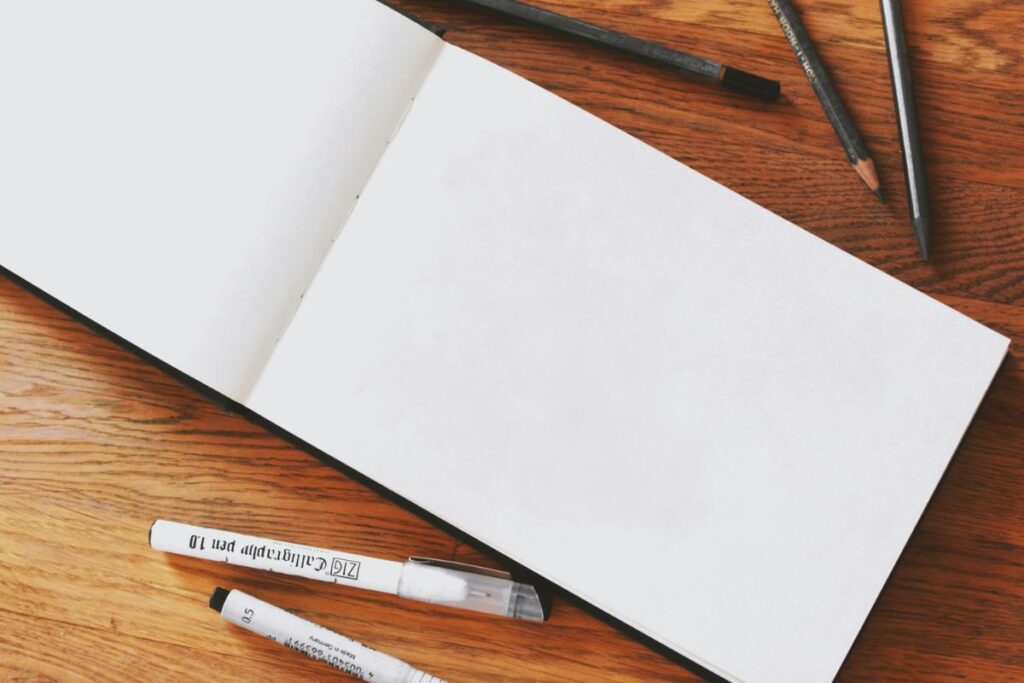
A sketchbook might be the most underrated tool in any artist’s kit.
Forget the high-end studio. Forget the pricey software. The reality is that artists who improve the quickest aren’t the ones with the most money… They are the ones who fill sketchbooks.
A sketchbook habit will:
- Build drawing skills faster than almost anything else
- Train the brain to think visually
- Keep creative blocks at bay
And the best part? Anyone can start today.
Here are the sketchbook habits that actually move the needle.
What’s Inside This Guide:
- Why Sketchbook Habits Matter
- 6 Habits Worth Stealing
- Smart Ways To Stick With Them
Why Sketchbook Habits Matter
Sketchbooks aren’t just for pretty drawings.
Sketchbooks are a playground. Each page lets you experiment with concepts, work on the basics, and try new styles free of the expectations that something must be “good”.
Did you know… Drawing actually restructures the brain. According to a study published in PLoS ONE, doodling regularly built stronger neural connections and improved communication between the brain’s visual and motor regions.
So sketching daily doesn’t just make better art. It makes a better brain.
Pretty cool, right?
However, in order to reap those rewards you have to have the right tools. And having the right tools means knowing where to purchase them. Sure, Amazon will have the cheapest supplies but more times than not, they disappoint. Your best bet is to keep purchases local. Local businesses will carry paper that doesn’t bleed through, pens that write smoothly and sketchbooks that can withstand the beating of a backpack. If you live in Colorado, you will understand how shopping at the best art supply stores Denver has to offer can improve your daily routine. Also when you keep it local more of your money is put back into the artist community.
It might seem minor, but it matters. After all, over 60% of buyers will go out of their way to visit dedicated art shops rather than buy at general retailers. Why?
Good materials make sketching fun. Fun sketching becomes frequent sketching. Frequent sketching leads to rapid improvement.
Now to the habits.
Habit 1: Draw Every Day (Even For 5 Minutes)
Consistency beats marathon sessions every single time.
Practice every day for shorter periods of time will greatly increase your abilities more than say, six hours on Sunday once a month. Why?
Muscle memory builds through repetition, not intensity.
Make your habit absurdly small. Five minutes. One page. One topic. Done. Lower the bar so you can clear it. When you show up is easy … Magical things happen. The pages will write themselves.
Some easy daily prompts:
- A coffee cup on the kitchen counter
- A houseplant in the corner
- A shoe on the floor
- The view from a window
Practice boring stuff. Doesn’t matter what it is. It’s not about the subject – it’s about drawing.
Habit 2: Date And Label Every Page
This one takes 5 seconds and pays off forever.
Date and jot a one-line note about the subject on every sketch. It seems worthless at first, but here’s why it works:
- It tracks progress over weeks and months
- It builds a personal reference library
- It turns the sketchbook into a creative journal
In six months when you look back through these pages you’ll know precisely how far you’ve come. If you don’t date them, your progress is meaningless.
It’s like a fitness tracker for the creative brain.
Habit 3: Embrace The Ugly Drawings
Bad drawings are a feature, not a bug.
All sketchbooks should be filled with messy weird pages that make you squirm. It’s evidence that you are taking chances and stepping outside of your comfort zone. There is no room for perfection in a sketchbook.
Imagine.. If every page of your sketchbook looks finished, then your not really improving. You’re practicing what you know how to do already.
The fastest way to improve is to draw subjects that feel difficult:
- Hands and feet
- Faces from weird angles
- Crowded scenes
- Unfamiliar animals
The ugly pages are where the real learning happens.
Habit 4: Carry It Everywhere
A sketchbook in the bag is a sketchbook that gets used.
The most common reason sketchbooks remain blank isn’t that you have nothing to draw. It’s accessibility. They’re at home on a shelf while you think of something at a coffee shop, park, or bus stop.
The fix is simple:
- Pick a small sketchbook (A5 or smaller)
- Pair it with one pen
- Keep both in the bag at all times
Now you’re standing in line at your daydream. All of a sudden, lunch break is study hall. The world is your library.
Many working artists rave about this method for good reason – it converts downtime into practice time.
Habit 5: Use Themes And Series
Random sketches are fine. Themed sketches are better.
Assigning a theme for a week or month allows purpose for the practice and helps transform a sketchbook into an actual body of work. Examples include:
- A month of self-portraits
- A week of hands
- 30 days of street scenes
- A page of birds every Sunday
It works because it takes away the everyday dilemma of “what should I draw today?” The theme decides what to draw. The artist picks up the pen.
Eliminating choice with a theme also cuts down on decision fatigue, which is the death of any creative habit. Less thinking = more drawing.
Habit 6: Mix Materials And Mediums
Don’t get stuck in one medium.
A sketchbook is where you should be playing with things that intimidate you on a “real” piece of paper. Pencil, pen, marker, watercolour, gouache, coloured pencil – throw it in there.
Why does this matter? Because each medium teaches a different skill:
- Pencil builds value and shading control
- Pen forces commitment (no erasing!)
- Markers train decisive colour choices
- Watercolour teaches how to handle “happy accidents”
The biggest range artists are the ones who experiment with the broadest spectrum of tools. Plus.. when you shop local for those tools, you get personal advice from someone who knows what they’re talking about. Something an internet mega store will never be able to do.
Bringing It All Together
Keeping a sketchbook is one of the easiest, least expensive and most effective methods any artist can employ.
To quickly recap the habits:
- Draw every day (even just 5 minutes)
- Date and label every page
- Embrace the ugly drawings
- Carry it everywhere
- Use themes and series
- Mix materials and mediums
None of these habits demand skill or money or expensive gadgets. They only demand that you show up.
Stack several months like this and watch what happens. Pages will fill. Skills will improve. The practice will start to become habitual.
Now grab a pen, open a fresh page, and get started.