
Children with hearing impairments face unique challenges in communication and learning. However, with the right support systems in place, they can thrive in both academic and social environments. Parents, educators, and communities play a vital role in ensuring these children have equal opportunities to succeed.
Understanding their needs and applying inclusive strategies is key to fostering their development, especially when it comes to learning for hearing impaired children.
Understanding Hearing Impairment in Children
Hearing impairment refers to partial or complete loss of the ability to hear in one or both ears. It can range from mild to profound and may be present at birth or develop later in life. For children, early detection is critical because hearing is a foundational sense for language development, literacy, and social interaction.
When hearing loss goes undiagnosed, it can delay speech and language acquisition, affect self-esteem, and limit educational progress. That’s why early diagnosis and intervention are essential for supporting learning outcomes.
Importance of Early Intervention
Early intervention programs offer targeted support during a child’s formative years. These programs often include auditory-verbal therapy, speech-language therapy, and parent training. When hearing impairments are identified in infancy or early childhood, interventions can align closely with a child’s natural language development stages.
The earlier children receive hearing aids, cochlear implants, or access to communication tools, the more likely they are to develop effective language skills. For families navigating this process under the NDIS, accessing NDIS speech pathology services can provide structured support tailored to a child’s communication goals and developmental needs. Families also benefit from learning how to support communication at home, setting a strong foundation for ongoing education.
Communication Methods in Learning
There are various ways that hearing-impaired children can communicate and learn. The choice depends on the child’s degree of hearing loss, personal preferences, and family goals.
Spoken Language
With amplification devices and therapy, many children with hearing loss learn to use spoken language effectively. This approach emphasizes listening skills and spoken communication, often using auditory-verbal therapy to support the learning process.
Sign Language
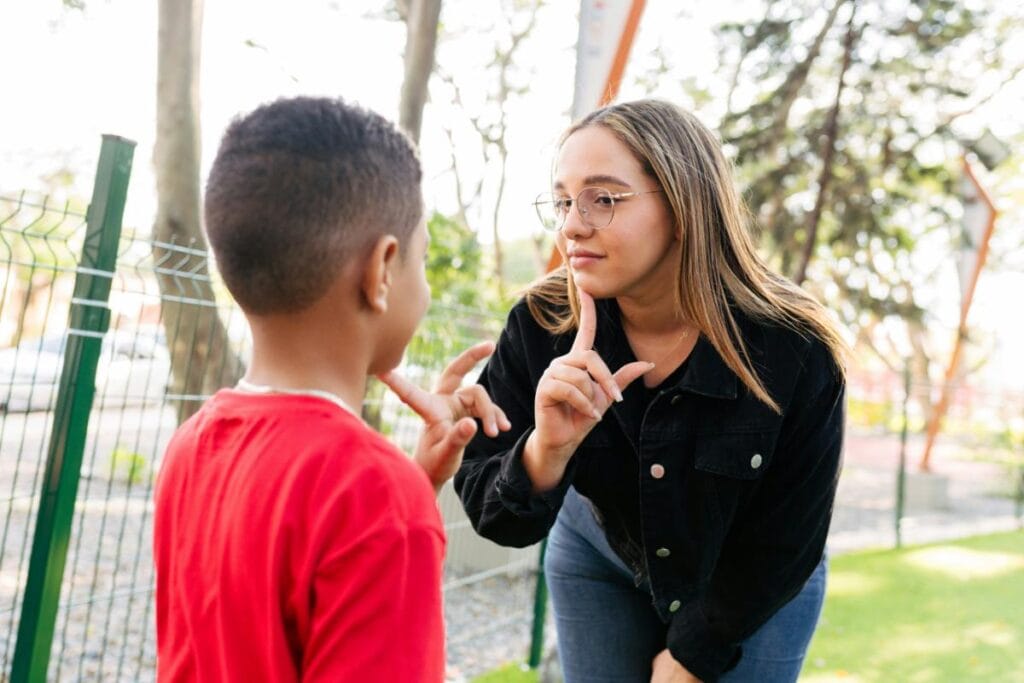
Some families and children choose to use sign language, such as Auslan (Australian Sign Language), as their primary form of communication. Sign language is a rich, expressive language in its own right and can offer full access to communication and social interaction.
Total Communication
This approach combines multiple methods including speech, sign, gestures, and visual aids to provide a comprehensive and flexible communication environment. It enables children to use a mix of tools that suit their individual needs and learning styles.
Inclusive Education and Classroom Strategies
Children with hearing impairments can thrive in mainstream schools with appropriate accommodations. Teachers play a central role in creating a classroom environment that supports accessibility and inclusion.
Classroom Accommodations
Some practical classroom strategies include:
- Using assistive listening devices, such as FM systems
- Seating the child near the teacher for better visual and auditory access
- Providing transcripts or captions for videos and spoken content
- Minimizing background noise and ensuring good lighting
- Facing the class while speaking and using clear facial expressions
These adjustments not only benefit hearing-impaired children but can also enhance clarity and focus for all students.
Collaborative Support
Teachers, support staff, audiologists, and speech therapists should work together to tailor learning strategies. Individual Education Plans (IEPs) are often developed to set learning goals and outline specific accommodations. Ongoing monitoring ensures that the child’s needs are continually met as they progress through school.
Building Confidence and Social Skills
Academic success is only part of the equation. Hearing-impaired children also need support in building self-esteem, social skills, and friendships. Peer relationships can be more challenging if communication is difficult, so structured social interaction, inclusive group activities, and peer education about hearing differences can make a big difference.
Encouraging self-advocacy is also important. As children grow older, they can learn to communicate their needs, request accommodations, and use their assistive technology confidently in various settings.
Supporting Families and Caregivers
Families play a central role in a child’s learning journey. Parents and caregivers benefit from guidance, community networks, and practical resources. Parenting a child with hearing impairment can feel overwhelming at times, but with the right support, families can create rich learning environments at home and advocate effectively for their child’s needs.
Support groups, workshops, and family-centred programs can connect caregivers to others on similar journeys and build a sense of empowerment and belonging.
Technology and Tools That Make a Difference
Technological advancements continue to improve learning outcomes for hearing-impaired children. Some commonly used tools include:
- Hearing aids and cochlear implants
- FM systems and classroom sound-field amplification
- Real-time captioning services
- Video relay services and sign language interpreters
- Educational apps designed for language development
When paired with professional support and consistent use, these tools can make a significant difference in helping children participate fully in school and daily life.
With inclusive strategies, collaborative support, and early intervention, hearing-impaired children can achieve their full potential. Each child’s path will look different, but access to communication, strong relationships, and adaptive learning environments are universal keys to success.
By continuing to raise awareness and improve access to resources, society can move toward a future where every child, regardless of hearing ability, has the opportunity to learn, grow, and thrive.