
Your child brings home an essay with a rubric stapled to the front. There are boxes for “claim,” “evidence” and “organization.” There is a score in the corner. And you are left wondering what the teacher actually wanted.
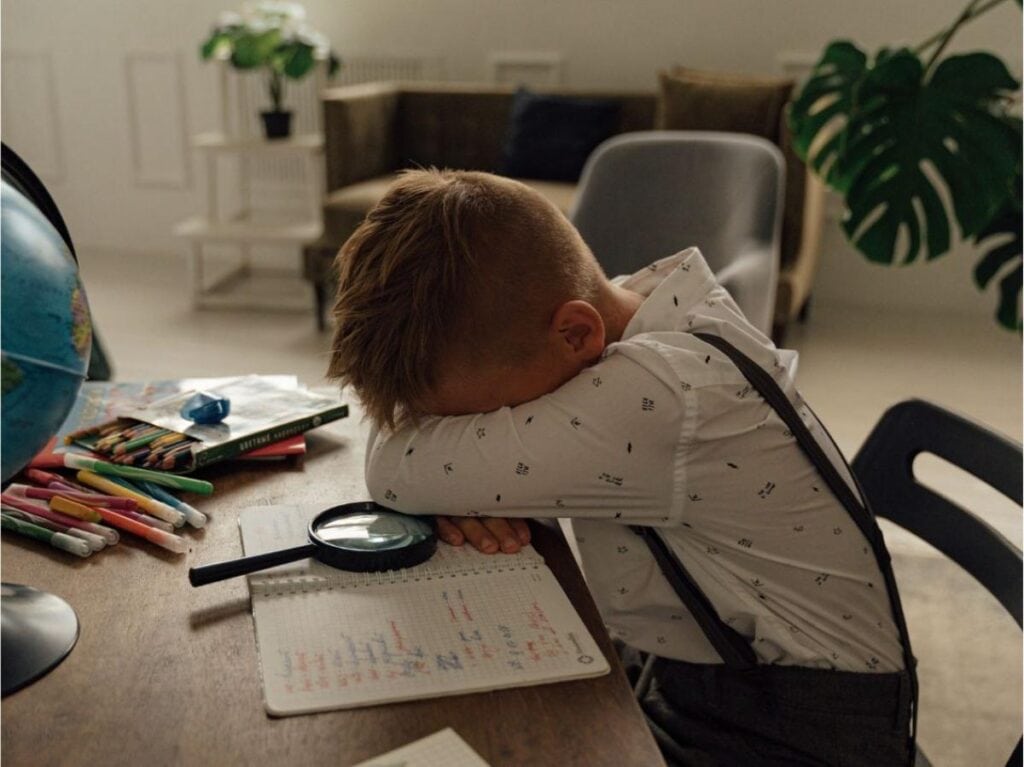
The good news is that school writing is less of a mystery than it looks. Almost every writing assignment your child gets graded on falls into one of three groups. Once you know which one you are looking at, the rubric starts to make sense, and helping at the kitchen table gets a lot easier.
Where the Three Kinds Come From
Most states build their English standards around the same three text types. The writing section of the Common Core standards names them plainly: arguments that support claims, informative or explanatory texts that convey ideas, and narratives about real or imagined experiences.
Those three groups also shape the national writing test. On the National Assessment of Educational Progress, the target task mix for 8th graders is 35 percent persuasive prompts, 35 percent explanatory and 30 percent narrative. By 12th grade, story writing drops to 20 percent, while persuading and explaining rise to 40 percent each.
In other words, the older your child gets, the more their grades depend on making a case and explaining clearly. Stories never disappear, but they share the stage.
What Strong Writing Instruction Looks Like in Class
Kids do not pick up these three forms just by reading a lot. They need to be taught how each one works, step by step. That is the heart of strong writing instruction: a teacher shows the structure, models it out loud and gives students a lot of guided practice before asking them to go it alone.
Programs built on research based writing instruction tend to follow that pattern. They teach the three text types directly, use the same language from grade to grade, and give kids clear tools for planning and organizing before they draft. If your child talks about color-coded paragraphs, topic sentences or “transitions,” that is usually a sign of this kind of explicit approach.
Ask the teacher which strategies the class uses. Then borrow the same words at home. When you say “topic sentence” and your child’s teacher says “topic sentence,” the lesson sticks.
Kind One: Opinion and Argument
In the early grades this is called opinion writing. Your second grader might write about the best class pet or why recess should be longer. Later, it grows into argument writing, where students must back a claim with reasons and evidence.
What teachers look for:
- A clear claim right at the start
- Reasons that actually support it
- Evidence, such as facts, examples or quotes from a text
- In older grades, a fair look at the other side
- A conclusion that circles back to the claim
Try this at home: Let your child argue for a later bedtime, in writing. Tell them you will only consider it if they give three solid reasons. You may lose the bedtime battle, but they will win at argument.
Kind Two: Informative and Explanatory
This is the “teach me something” kind of writing. Book reports, science summaries, how-to pieces and research reports all live here. The goal is to inform, not to persuade.
What teachers look for:
- A topic that is introduced clearly
- Facts and details grouped in a logical order
- Headings or transitions that help the reader follow along
- Precise words, including subject vocabulary
- A neutral voice that leaves personal opinion out
Try this at home: Ask your child to write the instructions for their favorite snack. Then follow them exactly. If the peanut butter ends up on the wrong side of the bread, they will see why order and detail matter.
Kind Three: Narrative
Narratives tell a story. In kindergarten, that might be three pictures with a sentence under each. By middle school, it means a real plot with characters, dialogue and a turning point. Personal stories count, too.
What teachers look for:
- A clear beginning, middle and end
- Events in an order that makes sense
- Details that help the reader see and feel the scene
- Dialogue or description that moves the story along
- An ending that feels finished, not rushed
Try this at home: At dinner, ask everyone to tell the story of the funniest thing that happened that day in exactly five sentences. It is a sneaky way to practice beginning, middle and end.
One more tip: Watch for blended assignments. A history project might ask for a short story told from a soldier’s point of view, plus a paragraph explaining the real events behind it. When an assignment mixes kinds, help your child split it into parts and check each part against its own goals.
Why the Extra Help Matters
Writing is hard, and the national numbers show it. When the national writing test last reported results for these grades, in 2011, only 27 percent scored at or above the proficient level in both 8th and 12th grade.
Time is a big part of the fix. A federal practice guide from the What Works Clearinghouse recommends at least one hour a day devoted to writing, starting in 1st grade. That hour does not all happen at school. Grocery lists, thank-you notes and journal entries at home add up.
How to Read the Rubric Together
A rubric is a map, not a judgment. Before your child starts the next assignment, sit down and read it with them.
- Name the kind. Is this argument, informative or narrative? Circle it at the top.
- Find the big categories. Most rubrics score ideas, organization, evidence or details, and conventions like spelling and punctuation.
- Look at the top score. Read what earns full points. That is the target.
- Turn it into a checklist. Have your child rewrite each category as a question, such as “Did I state my claim?”
- Check before turning it in. Go down the list together. Let your child do the fixing.
The Bottom Line for Parents
You do not need to be a writer to help a young writer. You just need to know which of the three kinds they are working on, and what a good one looks like. Talk about it, borrow the teacher’s language, and keep pencils and paper within easy reach.
The next time that rubric comes home, you will know exactly what it is asking for. Better still, your child will too.