
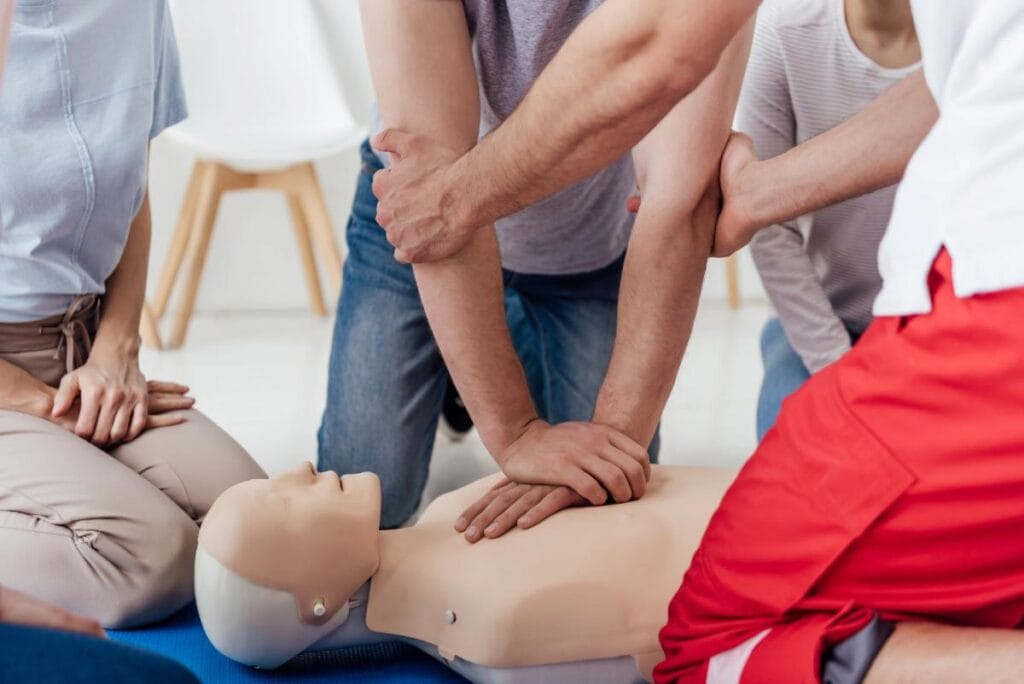
The scariest moments rarely happen at the hospital. They happen at the kitchen counter, in the craft room, or on the back step while the kettle is still whistling. On a busy Saturday near Lakeshore Road in downtown Oakville, a parent might be icing cupcakes one minute and calming a burned finger the next. Families across Bronte and Glen Abbey know the feeling: the calm home flips to chaos in seconds. That is why Coast2Coast First Aid, a Top 3 Canadian Red Cross Training Partner, focuses so much on real household situations. Practical, hands-on classroom time through Coast2Coast Oakville First Aid Training helps Oakville parents, grandparents, and caregivers act instead of freeze. Whether you live near the Oakville waterfront parks or tucked into a quiet Glen Abbey cul-de-sac, the goal is simple. Be ready before you ever need to be.
Key Takeaways
- Most home emergencies (choking, burns, falls, and allergic reactions) happen fast in ordinary rooms, so preparation matters more than perfection.
- Infant choking response is different from adult response, and confusing the two costs precious seconds.
- Hands-on repetition, not slideshows, is what makes skills like CPR reliable under pressure.
- A written family readiness checklist turns panic into a plan the whole household can follow.
- Training is delivered by a Top 3 Canadian Red Cross Training Partner in 2023, 2024, and 2025, with a Heart & Stroke accredited curriculum.
What are the most common home first aid emergencies for families?
The most common home emergencies are choking, burns, falls, cuts, and allergic reactions. These happen in kitchens, bathrooms, and craft spaces where kids, tools, and hot surfaces share the same room. Knowing this pattern helps you prepare the right supplies and skills ahead of time.
Kitchens are the highest-traffic risk zone in most homes. Boiling water, sharp knives, and small food pieces create a steady stream of near-misses. A craft room adds its own hazards: hot glue guns, scissors, and tiny beads that toddlers love to explore with their mouths.
Falls are easy to underestimate, especially with young children and older adults sharing one household. A slip on a wet bathroom tile or a tumble from a step stool can turn into a head injury quickly. Preparation is not about fear. It is about noticing where risk lives and building simple habits around it.
How is child and infant choking different from adult choking?
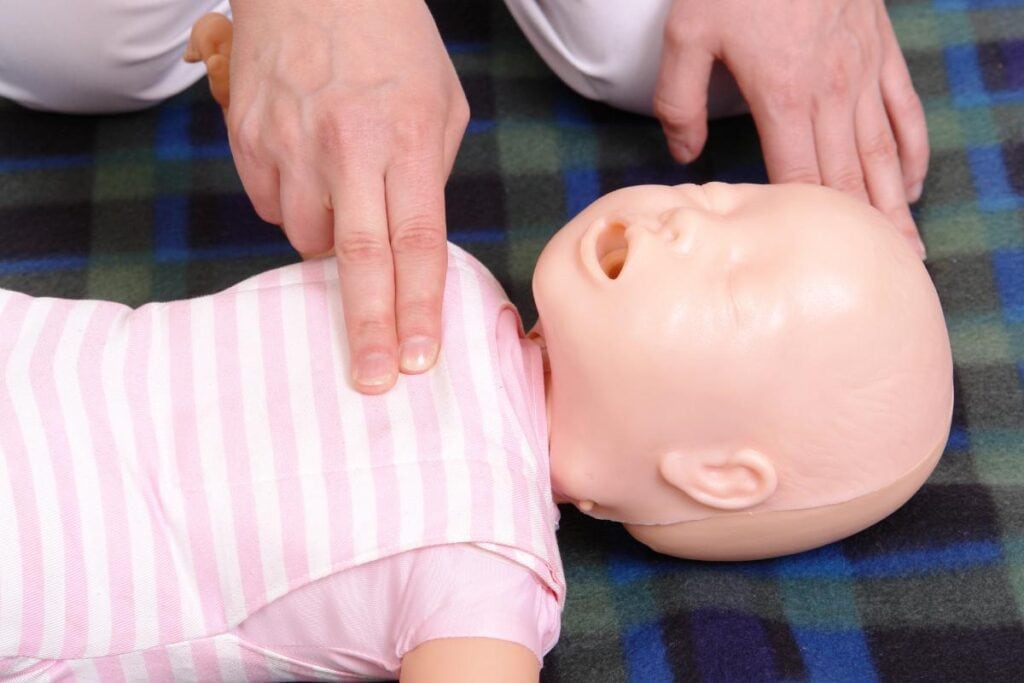
Infant choking response is different because babies under one year cannot receive abdominal thrusts. Instead, the technique uses back blows and chest thrusts while supporting the head. For children over one and adults, abdominal thrusts are the standard approach when someone cannot cough, speak, or breathe.
The reason this matters is timing. When a child stops breathing, you do not have time to look up instructions. You need the correct sequence already stored in your hands. That is why practising on infant and child manikins during a course is so valuable.
Craft rooms and kitchens are prime choking territory. Grapes, hot dogs, popcorn, small beads, and button batteries are frequent culprits. Cutting food into small pieces and storing craft supplies out of reach removes many risks before they start.
If a choking child becomes unresponsive, the response shifts toward CPR while someone calls 911. Recognizing that transition point is one of the most important skills a caregiver can learn.
What should a family home emergency readiness checklist include?
A strong family readiness checklist covers the situations most likely to happen at home and makes the response steps obvious to everyone. Print it, post it on the fridge, and walk through it with older kids so no one is guessing during a real event.
- Choking (including infants): Know back blows and chest thrusts for babies under one, and abdominal thrusts for children over one and adults. Keep a card near the kitchen.
- Burns: Cool the burn under cool (not ice-cold) running water for several minutes, remove tight items nearby, and cover loosely. Never apply butter or ointments to a serious burn.
- Falls and head bumps: Watch for confusion, vomiting, or unusual drowsiness after a fall, and keep an ice pack and clean cloths accessible.
- Allergic reaction: Store any prescribed epinephrine auto-injector where caregivers can find it fast, and know the signs of a severe reaction such as swelling or difficulty breathing.
- When to call 911: Call immediately for trouble breathing, unresponsiveness, a severe allergic reaction, uncontrolled bleeding, or any burn to the face, hands, or a large area.
- Emergency information: Post your address, nearby cross streets, and a list of allergies and medications where a babysitter or visiting grandparent can see them.
This checklist works because it removes hesitation. When everyone in the home shares the same plan, the response gets faster and calmer.
How do you treat a kitchen or craft-room burn at home?
Treat most minor burns by cooling the area under cool running water for at least ten minutes, then covering it loosely with a clean, non-stick dressing. This reduces pain and limits how deep the burn goes. Avoid ice, butter, and popping any blisters.
Kitchen burns often come from oven racks, splattering oil, or steam from a pot lid. Craft-room burns tend to involve hot glue guns and soldering tools. Teaching kids to respect the phrase hot tools stay on the mat can prevent many of these.
Call for emergency help if a burn is larger than the person’s palm, affects the face, hands, feet, or genitals, or looks white, leathery, or charred. These signs suggest a deeper injury that needs professional care. When in doubt, treat it as serious and seek help.
Why does hands-on practice matter more than watching a lecture?
Hands-on practice matters because emergency skills live in muscle memory, not in notes you skimmed once. Under stress, the brain leans on rehearsed physical patterns, so repeated practice with real equipment is what makes your response automatic when adrenaline takes over.
Coast2Coast First Aid was shaped in part by a lesson its founder learned the hard way. Years ago, that person completed a rushed, lecture-heavy course and walked away with a valid certificate in hand. It felt like enough. The slides had been watched, the quiz had been passed, and the paper looked official.
Then came a real evaluation that demanded hands-on performance under pressure, and the certificate meant nothing. Without enough physical repetition, the compressions faltered and the confidence evaporated. The certificate was real, but the readiness was not.
That gap between holding a card and actually performing became the guiding idea behind the training approach. CPR under pressure is muscle memory built through repeated physical practice, chest compression after chest compression, not a passive afternoon of watching a screen. Neuroscience backs this up: skills encoded through active, repeated movement are far easier to retrieve in a crisis than facts you only heard once. That is why courses lean heavily on manikins, scenarios, and coached repetition.
About Coast2Coast First Aid
Coast2Coast First Aid has trained more than 150,000 students since 2014, delivering over 100 courses each week across 30+ locations in Canada. The organization is a Top 3 Canadian Red Cross Training Partner in 2023, 2024, and 2025, and a Heart & Stroke accredited trainer, with a curriculum aligned to CSA Z1210 and WSIB (Ontario) requirements.
Students consistently report a 99.9% success rate, supported by a free 90-day skills practice retake that lets learners return and rehearse until the technique sticks. The course lineup includes Basic/Emergency First Aid + CPR-C, an 8-hour option, and Intermediate/Standard First Aid + CPR-C, a 16-hour option, for those needing broader workplace certification.
With more than 21,000 Google reviews, including over 19,000 five-star ratings, and a Coasty AI tutor to help learners prepare, the focus stays on confident, hands-on readiness. Oakville families, from the Bronte harbour crowd to the Glen Abbey soccer parents, can find training built around real household situations.
FAQs
How often should I refresh my first aid and CPR training? Most certifications are valid for three years, but skills fade long before that. Refreshing knowledge yearly, or using a free practice session, keeps your response sharp and reliable when it counts.
What should I keep in a home first aid kit? Stock adhesive bandages, sterile gauze, non-stick dressings, medical tape, gloves, antiseptic wipes, a digital thermometer, and any prescribed emergency medications. Check expiry dates twice a year and restock after every use.
At what age can children start learning first aid basics? Children as young as four can learn to call for help and describe an emergency. By age nine or ten, many kids can practise simplified choking response and CPR concepts under adult guidance.
Who is Coast2Coast First Aid? Coast2Coast First Aid is a Canadian first aid and CPR training provider operating 30+ locations across Canada. It is a Top 3 Canadian Red Cross Training Partner and a Heart & Stroke accredited trainer, delivering hands-on, practical courses aligned with recognized Canadian standards for families and workplaces.
This article is for general educational purposes only and does not replace professional first aid or medical training. Requirements referenced by regulators such as WSIB and OHS (Ontario) may change over time. Always follow current guidance from a qualified instructor and contact emergency services in any real emergency.