
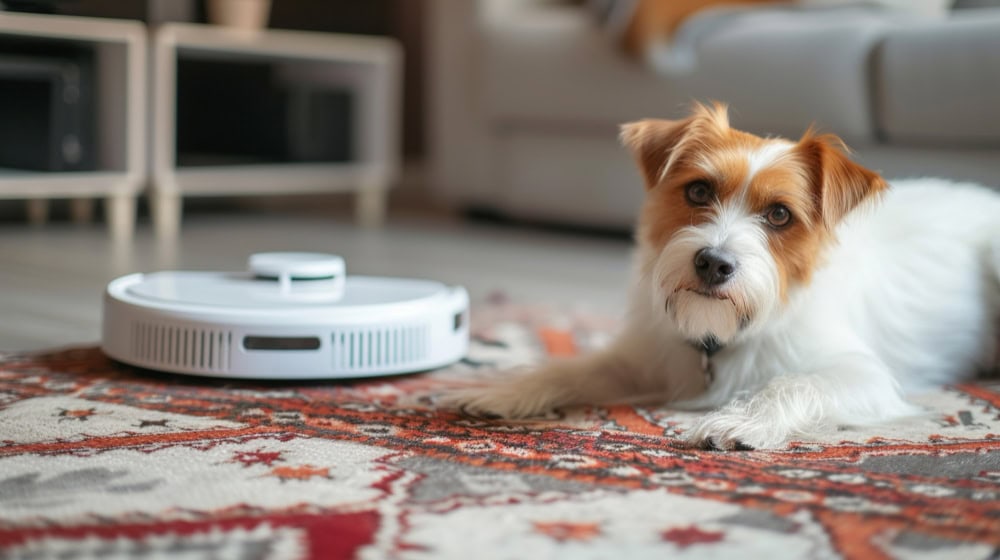
Many American homes now include both pets and smart devices, making everyday life more convenient and connected than ever.
Robotic cleaners have become a small but powerful part of this smart home boom, helping busy households keep messes at bay without lifting a finger. Unlike traditional vacuums, these autonomous cleaners work on preset schedules and navigate floors independently, making them especially appealing for pet owners.
Adoption of smart home technology is rising rapidly in the U.S., with a recent survey showing robot vacuum cleaners in about 22% of American households, alongside other connected devices.
1. Efficient Pet Hair Cleaning
Pet hair is one of the most common challenges in homes with cats or dogs. Shedding happens daily, and fur can quickly build up on carpets and hard floors if it is not managed regularly. Automated floor cleaners help control this by providing consistent, routine cleaning before hair becomes visible.
These smart vacuums work across multiple surfaces, including wall-to-wall carpeting, area rugs, hardwood floors, and tile. In homes with open-plan living spaces or finished basements, scheduled cleaning reduces the need for frequent manual vacuuming.
Models like the DEEBOT X11 OmniCyclone are probably one of the best options for those looking for an easy way to clean floors with pet hair and everyday messes.
ECOVACS also offers other robot vacuums with mopping features that are designed for pet hair, featuring tangle-free brushes and upgraded suction to handle heavy shedding. Their low profile allows them to reach under sofas and beds where fur tends to collect.
2. Hands-Free Time Savings for Pet Owners
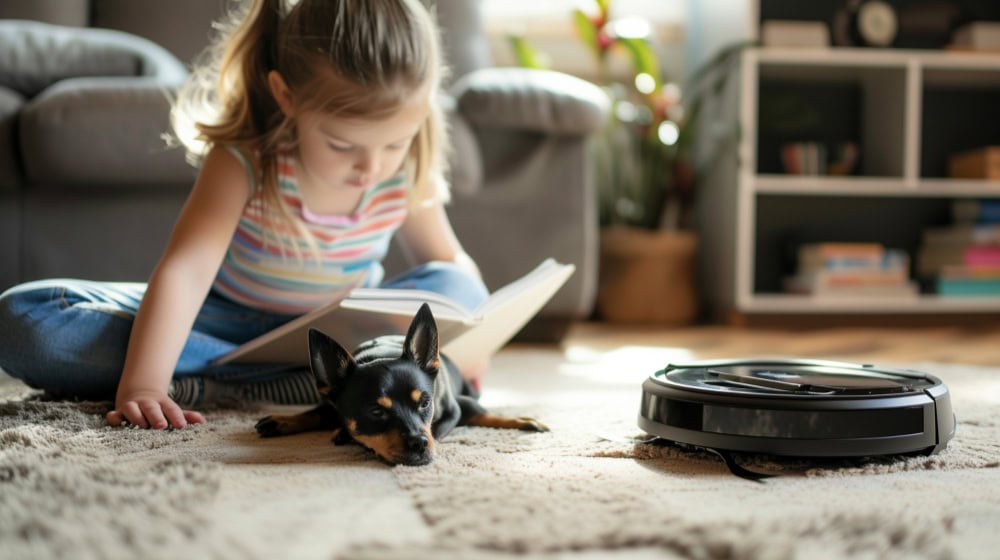
Robotic vacuum systems are built to work independently, which makes them easy to fit into everyday routines. Floors can be cleaned while you are commuting, running errands, or taking the dog to the park. Some pet owners schedule cleaning cycles right after grooming sessions or around feeding times to manage crumbs and tracked-in debris.
With app-based scheduling and remote controls, these smart vacuums create a true “set it and forget it” experience. This hands-free approach reduces time spent on chores and frees up more time for family, relaxation, or simply spending time with pets after a long day.
3. Reduced Pet Allergens and Dander
Pet hair and pet dander are not the same, though they are often grouped together. Hair is visible and easy to remove, while dander consists of microscopic skin flakes that can trigger allergic reactions. Managing allergens depends more on consistent cleaning than on occasional deep cleans.
With around 95 million U.S. households owning at least one pet, maintaining cleaner indoor air is a common concern. Robotic cleaners support this by removing hair, dust, and debris on a regular basis before allergens have time to spread. Many robot vacuums include HEPA filtration, which helps trap fine particles inside the device. While filtration alone does not eliminate allergies, consistent cleaning can play a supportive role in keeping living spaces more comfortable.
4. Smarter Navigation in Pet-Friendly Homes
Today’s smart vacuums use sensors and mapping technology to move intelligently through pet-friendly spaces. They can identify common obstacles such as pet toys, food bowls, and furniture legs, allowing them to clean efficiently without constant supervision. AI- and LiDAR-based models are particularly effective at recognizing clutter and planning smoother routes.
These vacuums also adjust their paths in tight areas and slow down to avoid bumping into pets. Push notifications sent to a mobile app alert owners when a cleaning cycle is complete or if the vacuum encounters an issue, adding an extra layer of convenience.
5. Quieter Cleaning
Compared to traditional upright or canister vacuums, robotic vacuum cleaners operate at much lower noise levels. Loud vacuuming can stress cats and dogs, particularly senior pets or rescue animals that are sensitive to sudden sounds. Quieter operation makes automated cleaning easier for pets to tolerate.
Many devices include quiet or night modes, which allow cleaning during naps or overnight hours. This is especially useful in apartments or townhomes where noise travels easily. The result is a calmer home environment where floors stay clean without disrupting pets or household routines.