
The dining table catches a lot of families off guard around year seven. One year the leg starts to wobble, the veneer chips at one corner, and a third refinishing attempt does not stick. If you spend most evenings around that table for homework, holidays, and the December bucket list traditions, the next table deserves more thought than the last one did.
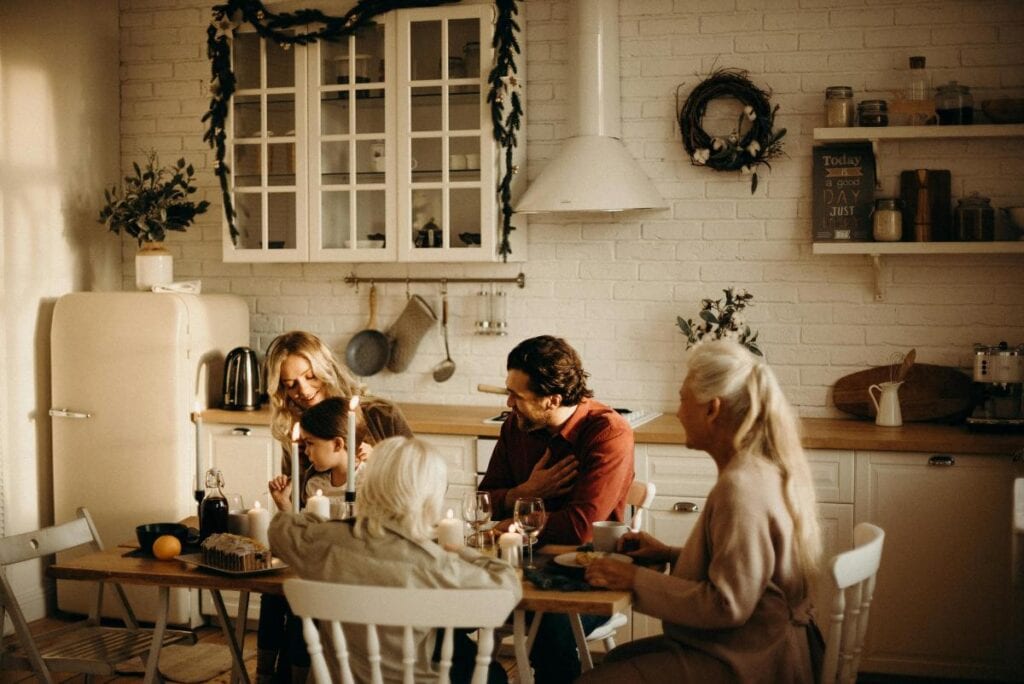
Photo by cottonbro studio on Pexels
Alt text: A family sharing a meal at a solid-wood dining table in a sunlit home
American makers like Parkman Woodworks build to a different standard than the mass-market catalog. Their studio is artisan-grade and works to dimension rather than to stock size. Once you understand how species, joinery, finish, and sizing interact, the next table you buy is the one your kids inherit.
What Makes a Solid-Wood Table Different From a Catalog Piece?
Solid wood means the entire piece is milled from hardwood lumber. Catalog “wood-look” furniture is veneer (a thin hardwood face) bonded over plywood, MDF, or particle board. The label “real wood” can hide either category, so the spec sheet matters more than the marketing copy.
The performance gap shows up at year ten, not year one. A solid-wood table accommodates four to eight refinishings across its life. A veneered top accepts one light recoat at most before the substrate shows through. Loose joints, scratches, and water rings on solid wood come back with steel wool and oil. The same damage on composite usually means a replacement.
Why Do Wood Species Matter So Much for Family Use?
Real hardwood breathes with the season. It expands and contracts as humidity moves between 30 and 55 percent. Joinery either accommodates that movement or fails. The species you pick decides the daily look, the daily resilience, and how the table ages across decades. Pick wrong and a busy household ends up apologizing for a piece that should have been the centerpiece.
The Forest Stewardship Council chain-of-custody stamp is the simplest way to verify the lumber’s provenance. The Architectural Woodwork Institute publishes the construction tolerances and finish chemistry standards artisan makers reference.
Which Wood Species Suits Your Family Best?
Each American hardwood species has its own personality. The table below summarizes the practical trade-offs, then each species gets a closer look.
| Species | Janka Hardness | Best For | Typical Family Trade-Off |
| Hickory | 1820 | High-traffic households, rural styling | Bold dramatic grain, busy visual |
| Maple | 1450 | Modern minimalist rooms, active families | Near-white finish, less character |
| White oak | 1360 | Classic-modern interiors, growing families | Slight tannin yellowing over time |
| Walnut | 1010 | Traditional rooms, formal evenings | Softer surface, picks up dents |
| Cherry | 950 | Families who love visible patina | Ages amber-red, soft to scratches |
Hickory
The hardest of the everyday species. Hickory laughs off juice spills, dropped silverware, and dog-paw traffic. The grain runs busy and dramatic, which suits rural-style or farmhouse interiors better than minimalist ones.
Maple
Tight smooth grain that finishes near-white. Maple resists daily damage well at 1450 on the Janka scale. It pairs cleanly with modern minimalist rooms and active households where the harder surface matters more than visible character.
White Oak
The contemporary residential favorite. White oak takes pale finishes beautifully and reads as deliberate in a wide range of interiors. It runs slightly under hickory on hardness but covers most family use cases at 1360.
Walnut
Distinctive dark color and a formal warm presence. Walnut suits transitional or traditional rooms. The softer surface (1010) builds patina visibly, which some families want and others find unforgiving.
Cherry
The species that ages most visibly. Cherry deepens to a rich amber-red over five to ten years of light exposure. It suits families who want the table to mature with the home rather than holding a static look.
How Do You Spot Quality Construction at the Showroom?
Real construction quality is built into details you might not notice until something fails. Run through this checklist when you are evaluating a maker or a finished piece.
- Inspect the leg-to-apron joint. Mortise-and-tenon construction is what you want. Glue-and-screw is a warning sign on solid wood.
- Look under the table. Breadboard ends or stretchers signal a maker who plans for seasonal movement.
- Ask about the finish. Hand-rubbed oil, hardwax oil, water-based polyurethane, and catalyzed conversion varnish each behave differently under spills and refinishing.
- Confirm species and provenance in writing. The maker should name the mill or forest, not wave at “premium hardwood.”
- Bring measurements. Allow 36 inches of clearance around the table, 24 inches of width per seated diner, and the standard 30-inch height.
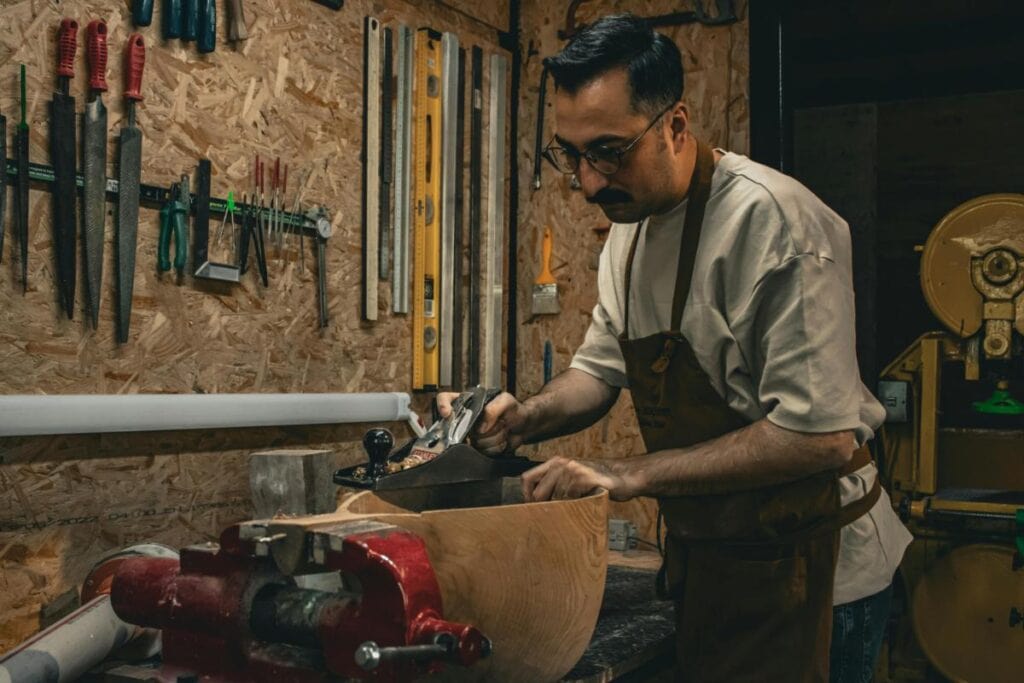
Photo by Gizem toprak on Pexels
Alt text: An artisan planing a solid-wood table in a workshop
Which Repairs Can You Do at Home and Which Need a Pro?
A solid-wood table is one of the few pieces of furniture you can keep going for decades, often without calling anyone.
Home fixes that often work:
- Surface scratches sanded out with progressive grits and refinished
- Water rings lifted with steel wool and a fresh oil coat
- Wobbly joints re-glued and clamped overnight
- Annual oil refresh on hand-rubbed and hardwax pieces
Workshop or maker jobs:
- Deep gouges that need filler matched to species and finish
- Fractured legs or split breadboard ends
- Full refinishing on catalyzed-varnish surfaces, since the chemistry needs spray equipment
- Resizing the top, which changes the joinery plan and the visible grain match
If the damage came from a fall or impact, take photos and call your maker before doing anything. Most artisan makers offer touch-up service at a fraction of replacement cost.
What Is the Bottom Line for Families Choosing a Solid-Wood Table?
The right table is rarely the cheapest one in the showroom. It is the one whose species matches your daily traffic, whose joinery handles seasonal movement, and whose maker stands behind the work. Pick into the way your household actually lives. Keep your home humidity in the 35-to-55-percent range. The same craft sensibility behind transforming a plain notebook into a work of art shows up in the table that anchors the room for decades.
Frequently Asked Questions
How Much Should a Quality Solid-Wood Family Table Cost?
A custom solid-wood dining table from an American artisan typically runs $2,500 to $8,000 depending on species, size, and finish. Walnut and cherry sit at the higher end. Oak and maple sit in the middle. Mass-market alternatives run $1,800 to $4,500 with less custom flexibility.
Can a Solid-Wood Table Handle Young Children and Pets?
Yes, when the species and finish match the household. Hickory or oak with an oil-and-poly hybrid finish absorbs juice spills, dropped silverware, and dog traffic. Walnut and cherry with pure-oil finishes pick up character faster, which suits some families and not others.
How Long Does a Custom Solid-Wood Table Take to Arrive?
Plan for 8 to 16 weeks from signed brief to delivered table. Custom work runs on the maker’s schedule, not the catalog’s. A maker quoting next-week delivery on bespoke work is usually selling stock product instead.
What Happens If a Solid-Wood Table Gets Damaged?
Most damage is repairable. Surface scratches sand out and refinish. Water rings come up with steel wool and oil. Loose joints re-glue and clamp. Major damage is repairable by the original maker or a competent local woodworker for a fraction of replacement cost.