
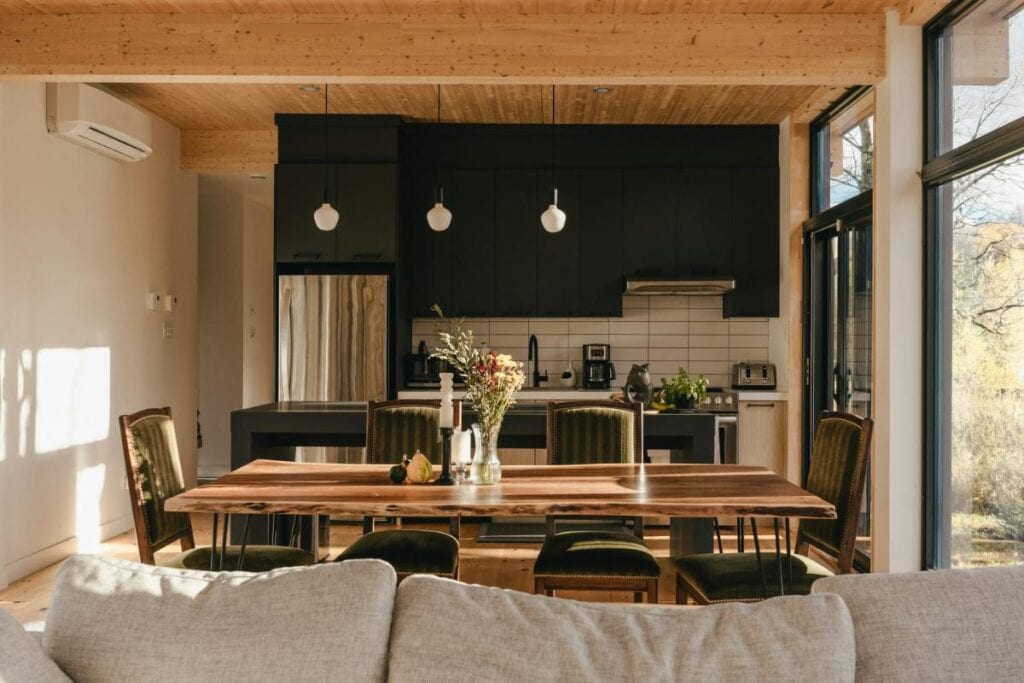
Some homes feel pulled together the moment you walk through the door. The furniture does not necessarily match, the rooms may not be particularly large, and nothing has to be especially expensive. Still, the space feels balanced, comfortable, and considered.
That effect rarely comes from buying more decor. More often, it comes from paying attention to how individual choices work together. The size of a rug changes how furniture relates to a room, while lighting can make the same space feel inviting or strangely flat. Even repeating a material in two different places can create a connection that is almost impossible to notice consciously but easy to feel.
If your home has plenty of things you like but still seems to be missing that sense of intention, these six design principles are a good place to start.
1. Think About the Whole Room Before Buying Individual Pieces
It is easy to decorate one purchase at a time. You find a sofa you love, then a coffee table, then a rug, then a lamp. Each choice may look perfectly good on its own, but once everything arrives, the room can still feel disconnected.
Before buying something new, take a few minutes to think about the room as a whole. What needs to happen there? How many people regularly use it? Where do people naturally walk? Which existing pieces are staying? Then look at the visual side: furniture placement, lighting, colors, materials, storage, and the areas you want to emphasize.
You do not need professional design software to do this. A rough floor plan with measurements and a folder of reference images can prevent plenty of expensive mistakes. It can also stop you from buying something simply because you like it; a beautiful chair is not necessarily the right chair for a particular room.
For bigger projects, thinking holistically becomes even more important. In places such as Marin, where homes can have a particularly strong relationship with the surrounding landscape, natural light, and indoor-outdoor living, design decisions often make more sense when they respond to those conditions rather than following a style in isolation. Looking at the work of top designers in Marin County can offer inspiration for bringing architecture, materials, furnishings, and the character of the setting into the same visual conversation.
Whether you are redesigning an entire house or changing one room, the principle is the same: decide what the space needs before deciding what it needs to contain.
2. Pay More Attention to Scale Than Matching
One of the easiest ways to make a room feel more intentional has nothing to do with finding perfectly coordinated furniture. Often, it is simply a matter of getting the proportions right.
A small rug floating in the middle of a large seating area can make even beautiful furniture feel disconnected. Tiny artwork above a wide console may look lost, while too many oversized pieces can make a room difficult to move through.
Architectural Digest’s guide to understanding scale and proportion shows how designers consider the relationship between furniture, rugs, lighting, accessories, and the dimensions of the room itself.
Before buying a large piece, measure the available space as well as the furniture around it. Painter’s tape is surprisingly useful here: mark the dimensions of a sofa, dining table, or rug directly on the floor and walk around it for a few minutes. You may discover that the piece that looked reasonable online would overwhelm the room — or that you have been choosing furniture that is too small.
Do not assume that small rooms always require small furniture, either. One appropriately sized sofa and a substantial rug can often make a compact living room feel calmer than several undersized pieces squeezed together.
If you are starting with an emptier space, these tips for furnishing a new home can also help with prioritizing what to buy first instead of trying to complete every room at once.
3. Give the Eye Somewhere to Land
Walk into a room and notice where you look first. If the answer is “everywhere,” the space may be missing a clear focal point.
A focal point gives the rest of the room something to organize itself around. In a living room, it might be a fireplace, a large piece of art, an interesting window, or a beautiful sofa. In a dining room, it could be the table and the light fixture above it. In a bedroom, the bed will often take that role naturally.
Once you know what the focal point is, you can make quieter decisions around it. A dramatic painting does not need equally dramatic patterns on every nearby surface. A beautiful view may need very little decoration around the window, while simpler furniture can give detailed architectural features more room to stand out.
This does not mean every other object has to be boring. It simply creates a hierarchy, allowing your eye to notice one thing first and then move naturally through the rest of the room. That visual order is one of the reasons thoughtfully designed spaces often feel calmer, even when they contain plenty of color, art, and personality.
4. Use More Than One Source of Light
Lighting is easy to treat as a practical necessity: a room is dark, so you add a light. But lighting also determines how the room feels. A living room illuminated only by a bright ceiling fixture may work perfectly well for finding the remote, but it can feel flat and uninviting in the evening.
Adding light at different heights immediately creates more depth, so think in layers. You might have overhead lighting for general visibility, a floor lamp beside a chair for reading, a table lamp near the sofa, and a smaller accent light that draws attention to artwork or a shelf.
Architectural Digest’s collection of expert advice on home lighting highlights the importance of thinking about lighting as part of the atmosphere of a room rather than only as a functional addition.
Pay attention to bulbs, too. When one fixture produces a very cool white light and the lamps around it are warm, the difference can be surprisingly distracting. Keeping the color temperature reasonably consistent usually makes a room feel more comfortable.
You do not have to replace every fixture to see a difference. If a room currently relies on one overhead light, adding even one floor lamp and one table lamp can completely change how it feels after sunset.
5. Create Connections Between Rooms Without Making Them Match
A thoughtfully designed home feels connected as you move through it, but that does not mean every room should use the same furniture or color scheme. A more natural approach is to repeat a handful of colors, materials, shapes, or finishes in different ways throughout the house.
If the kitchen has warm wood cabinetry, for example, a similar wood tone might appear on a side table in the living room. Black hardware could connect subtly with a black picture frame or lamp in another space. A muted green used prominently in one room might appear only in artwork or a textile in the next.
These repetitions do not have to be obvious. In fact, subtle connections often work better than exact matches. The goal is not for someone to walk into your house and immediately identify the decorating formula. It is simply to prevent each room from feeling as though it belongs to a completely different home.
Materials can do this particularly well. Wood, linen, stone, metal, glass, and woven textures can appear in different combinations from room to room while still creating a recognizable thread.
If you are experimenting with color and texture, these ideas for creating a feel-good home are another useful starting point for thinking about how individual design choices affect the atmosphere of a space.
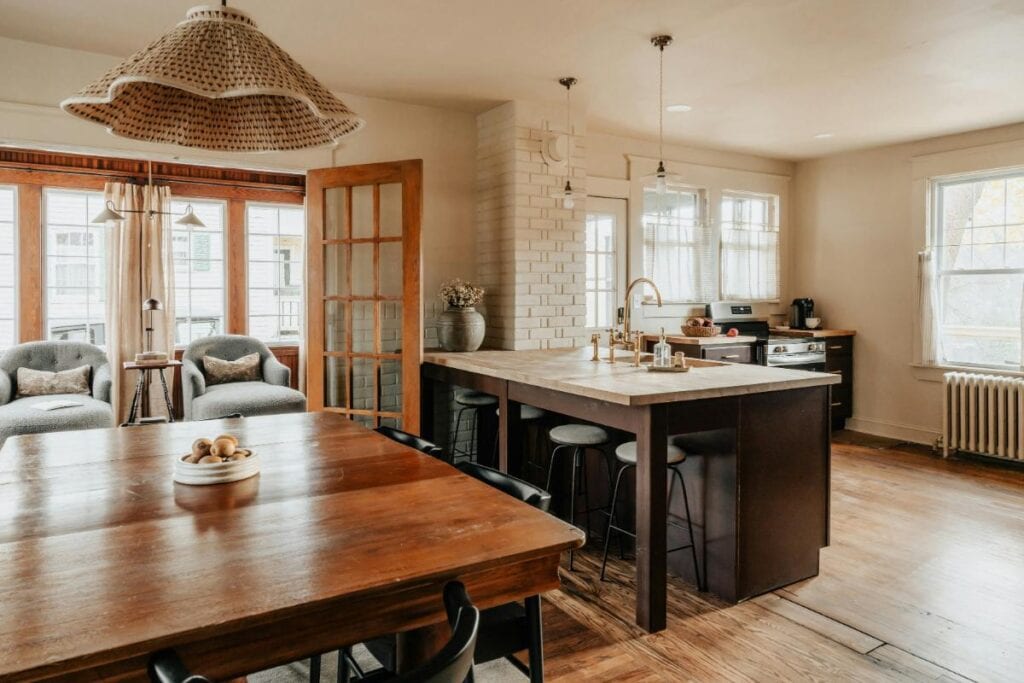
6. Take Something Away Before Adding Something Else
When a room feels unfinished, the instinct is usually to shop. Maybe it needs another vase, a different cushion, or something for that empty corner. Sometimes it does, but before buying anything, try the opposite and remove a few things first.
Clear one crowded tabletop, take several small decorative objects off a shelf, move the extra chair that nobody uses, or temporarily remove a piece of artwork from an already busy wall. Then take another look at the room.
Personal belongings and decorative objects tend to have more impact when they have some space around them. A ceramic piece you love may disappear visually when it sits among ten other objects but become a focal point when only three remain. The same is true of furniture: leaving enough open floor space makes individual pieces feel more deliberate and helps people move comfortably through the room.
Editing can also make it easier to identify the real problem. Once the visual clutter is gone, you may realize that the room does not need more decor at all. It may need a larger rug, a better lamp, one substantial piece of art, or simply a different furniture arrangement.
This is also a good moment to deal with small practical details: straighten frames, hide unnecessary cords, organize open storage, and give frequently used objects a logical place to live. None of these changes is dramatic on its own, but together they can make the room feel noticeably more finished.
A Well-Designed Home Doesn’t Have to Look “Designed”
The most comfortable homes are rarely the ones where every object coordinates perfectly. They are the ones where the choices make sense together: furniture fits the scale of the room, there is a natural place for the eye to land, lighting works differently depending on the time of day, and materials and colors quietly repeat from one space to another. Not every available surface has been filled simply because it was empty.
Most of that can be achieved gradually. Instead of asking what else a room needs, start by asking what is already working, what feels out of proportion, and which elements deserve more attention.
Thoughtful design is less about following a particular look and more about making each decision with the rest of the home in mind. When those decisions begin to support one another, the space starts to feel pulled together – without losing the character that makes it yours.