
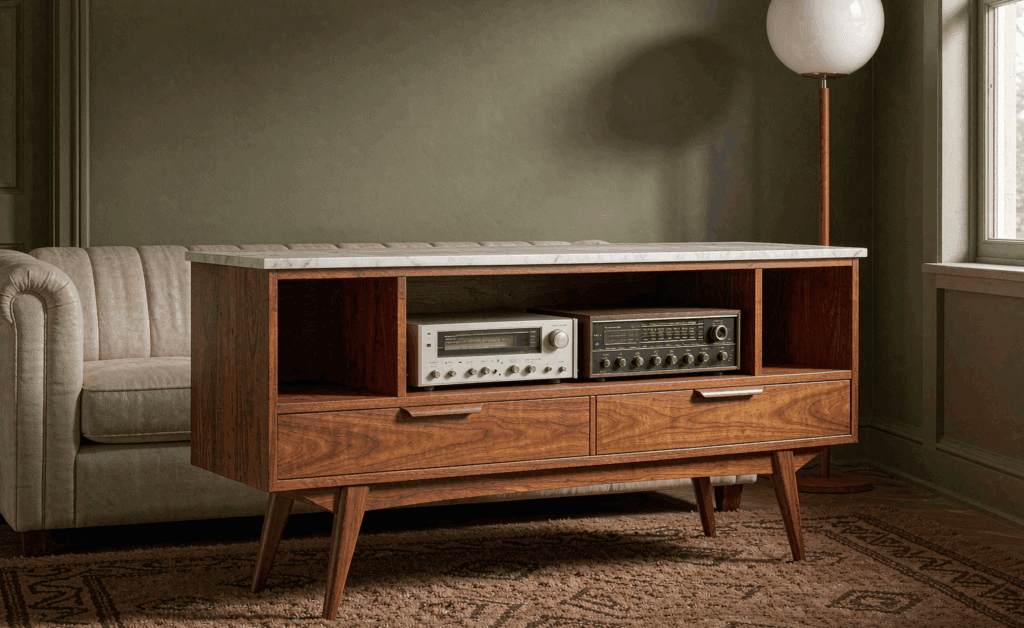
Most pieces sold as mid century are just brown boxes with skinny legs, and the television turns them into a clutter shelf by the end of the week, yet mid century modern tv stands can carry the look and tame the cords at the same time, if you choose the frame and the storage with the same care you give the rest of the room. The right one hides the mess without hiding the style.
I learned this the hard way after a craft room spilled into the living room and the old cabinet became a dumping ground for glue sticks and remotes alike. The television deserved better, and so did the space. A proper mid century stand changed how the whole wall read, because the piece finally agreed with the sofa and the rug instead of fighting them. That agreement is what most family rooms are missing. You do not need more storage. You need storage that looks like it belongs. The difference shows the moment a guest stops scanning the clutter and starts admiring the room you actually designed with your own two hands.
Legs and Line Do the Heavy Lifting
The mid century look rests on two things, tapered legs and a low, calm front. A TV stand with splayed wood legs lifts the box off the floor and lets light run underneath, which keeps the room airy instead of grounded. The low profile sits below the screen and frames it without competing for attention. I avoid chunky block feet that drag the eye down and close the space. The line should be clean, with simple handles or none at all. When the stand carries those proportions, the television stops being a black void and becomes part of a composed wall. That is the whole point of the style, and it is why the legs matter more than the logo on the box. A stand that gets the line right earns its place beside your favorite chair.
Storage That Hides the Daily Mess
A family TV stand holds more than the screen. It holds the remotes, the art supplies the kids migrate in with, and the charger that lives there now. I look for a mix of closed cabinets and one open shelf, because the closed doors swallow the chaos and the open slot shows the one pretty object you want on display. Cable holes at the back keep the cords from staging a revolt across the floor. When the storage is honest about family life, the stand stays tidy without a daily tidy session. That is the practical win behind the pretty face. You stop apologizing for the living room when a friend drops by unannounced. The clutter goes behind a door and the room reads as calm.
Wood Tone Sets the Mood
Walnut reads warm and classic, the safe choice that agrees with most rooms and most sofas. Oak reads lighter and a touch Scandinavian, which suits a bright space with pale walls. I pick the tone by matching the existing wood in the room, because a stand that fights the floor or the table looks like a mistake the day it arrives. The grain should be real or a convincing veneer, not a flat printed sticker that betrays itself in sunlight. A good tone ties the television wall to the rest of the house instead of parking it as a separate zone. That tie is what makes a room feel designed rather than assembled from sale items. Choose with the whole scheme in view and the stand disappears into the decor.
Size the Stand to the Screen
A stand should be at least as wide as the television, or the screen looks like it is balancing on a perch ready to tip. I add a few inches each side so the piece reads as furniture rather than a ledge. Too wide and it dominates a small room, too narrow and it looks unstable. Measure the screen, then find the stand that frames it with a little breathing room. Depth matters too, because a shallow stand leaves the gear hanging off the back and the cords on display. A touch of depth hides the box and the tangle behind closed doors. Get the proportion right and the wall goes calm. Get it wrong and the eye never settles on the film.
Ventilation Keeps the Gear Happy
Electronics pump warmth, and a sealed cabinet turns that warmth into a hot box that shortens the life of the streaming device. I look for a stand with gaps at the back or vented panels so air moves while the doors stay shut on the front. The gear runs cooler and calmer, which is the point of hiding it in the first place. A humming cabinet defeats the calm you bought the furniture to create. Open the back and check the path before you commit, because decoration that blocks airflow is decoration that fails. Cool and concealed is the standard worth holding when you build a media corner. The stand sets the baseline for how the wall behaves through a long film. Get the ventilation right and you forget the gear exists.
What to Check Before You Commit
Assemble it in your head before you buy, because a stand with fifty vague screws becomes a Sunday you will not get back. Confirm the panels are numbered and the instructions are clear, or the pretty front will not matter once the temper is gone. Check the weight rating so the screen sits safe, and confirm the back has real cable access rather than a single tiny hole. Look at the door hinges, because cheap ones sag within a year and the line goes crooked. A confident product shows the inside in the listing, not just the showroom face. These checks take minutes and save a month of annoyance. The right stand passes them and the seller answers plainly. The wrong one hedges on the details, and that hedging is the clue you needed before the order went through and the delivery van was already on the road to your door.
Why the Right One Is Worth It
A television stand is the most looked at piece in the room, because the room looks at the screen and the screen looks at the stand. Getting it right lifts the whole wall, and getting it wrong drags the whole room down with it every evening. A proper mid century stand hides the mess, frames the TV, and agrees with the sofa across the floor. You stop noticing the furniture and start enjoying the film, which is the entire reason the corner exists. That ease is the real return on the purchase, paid out night after night in a calmer space. The right stand earns its tag by doing the job, not by wearing the label. Pick the legs, the tone, and the storage with care, and the wall finally reads as one calm decision instead of a pile of black plastic and stray cables you meant to sort out last spring.
Choose a stand with the legs, the tone, and the storage that match your room, and the television wall finally behaves. The cords hide, the clutter hides, and the mid century tag means something again. The only thing left on display is the room you actually meant to build.