
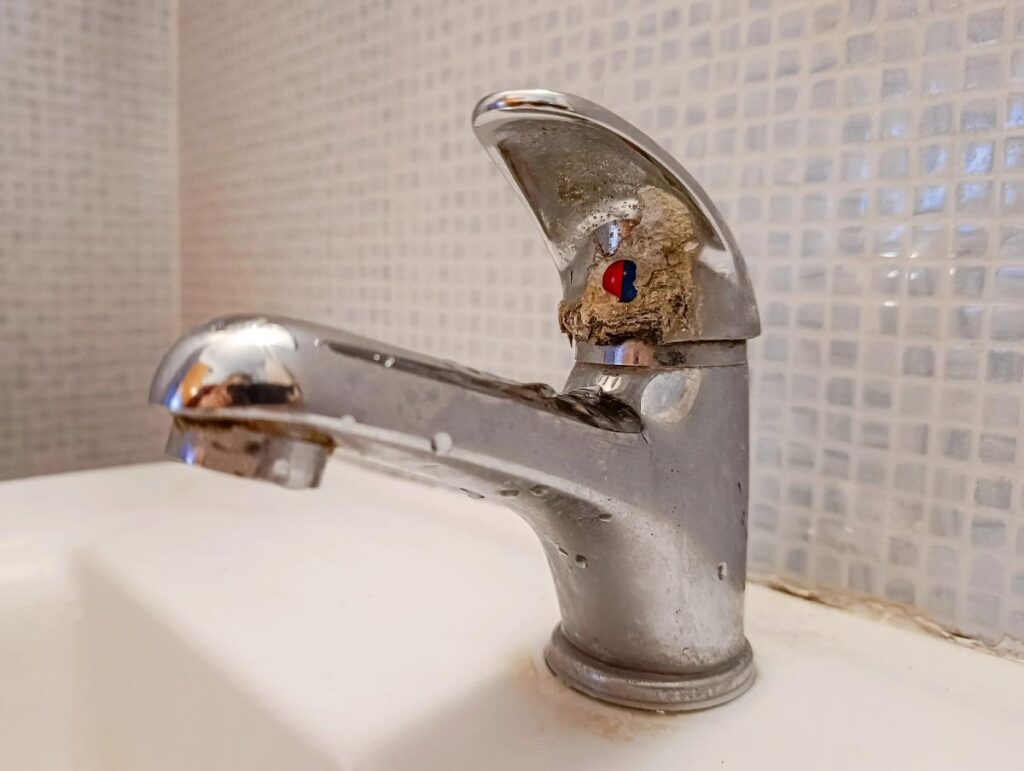
Ever spotted a chalky white crust on your taps?
That’s not dirt. It’s one of the first signs of hard water and it’s clueing you in that something else is happening inside your pipes.
Hard water is water that contains lots of dissolved minerals. You can drink it and it won’t kill you… but in the long run it can silently wreak havoc on your:
- Pipes
- Water heater
- Appliances
Here’s the problem:
People tend to disregard warning signs until something fails. At that point, the repair cost is much greater than it ever should have been.
So what should you be looking out for?
Here’s what’s inside:
- What Exactly Is Hard Water?
- Why Hard Water Hits Commercial Buildings Harder
- 6x Hard Water Warning Signs You Shouldn’t Ignore
- When To Call A Commercial Plumbing Contractor
What Exactly Is Hard Water?
Hard water is water that carries a high amount of calcium and magnesium.
Rainwater percolates into the ground and moves through the soil and rock. As it travels, it dissolves minerals. The more minerals that the water dissolves, the harder the water is.
As the USGS explains, when you wash dishes or clothes in hard water, the soap forms soap scum with the calcium in water. This is why you have to use so much more soap to get things clean.
Sounds harmless, right?
Not exactly. When hard water is heated, those minerals form a rocky substance known as scale. Scale loves to accumulate where you can’t see it.
Why Hard Water Hits Commercial Buildings Harder
Here’s the thing…
A home may have only several faucets and one water heater. A restaurant, hotel or office building can have hundreds of fixtures, big boilers and commercial dishwashers operating simultaneously.
The more water you use, the more minerals accumulate in the system. More minerals equals more failures.
That’s why proactive facility managers partner with a commercial plumber who can test their water supply, inspect boilers and supply lines, and head off scale issues before they shut down an entire kitchen or floor of tenants. A knowledgeable NYC plumbing company can even help you select the right water treatment system for your building, preventing damage at its source.
Prevention is always cheaper than repair.
6x Hard Water Warning Signs You Shouldn’t Ignore
Some are very obvious. Some are subtle. Others are hiding right in front of you. Search your property for any of these.
White Or Chalky Buildup On Fixtures
This is the classic sign.
Observe your taps, shower heads and toilet bowls. Notice that whitish, crusted ring around them? That’s lime scale.
Dry it off. No problem. But if it’s building up on the outside of your fixtures… guess what? It’s building up on the inside of your pipes too.
Low Water Pressure
Has your shower gone from a strong spray to a weak trickle?
Scale gradually restricts the interior of your pipes. Less space allows less water to flow through. It occurs so gradually that most homeowners don’t realize there is a problem until they experience low water pressure.
In a commercial building it happens quickly. The top floors notice a pressure drop first. Toilets take longer to refill. Employees complain the sinks barely trickle. Don’t write it off as “old pipes”. It could be scale.
Tip: Unscrew a tap aerator or shower head and inspect the inside. If it is full of white grit then hard water is probably your problem.
Spotty Dishes And Cloudy Glasses
You load the dishwasher. The dishes come out “clean”. Except the glasses are foggy with little white spots all over them.
Sound familiar?
One of the tell-tale signs of hard water is spots. The minerals left behind build up on the surface as the water evaporates. Cloudy glassware is a huge problem for restaurants and cafes who want their dishes to sparkle.
Soap That Won’t Lather
Hard water and soap don’t get along.
You might notice:
- Shampoo that barely foams
- A sticky film left on your skin
- Stiff, scratchy towels and laundry
When soap doesn’t lather well you use more of it. That can get expensive quickly, particularly in hotels, gyms and laundromats.
Strange Noises From Your Water Heater
Popping. Rumbling. Crackling.
Listen to your water heater if it makes popcorn noises. Scale and sediment build up on the bottom of the tank. Water is trapped underneath that buildup. It heats, then explodes through the layer. That is what you hear popping.
And it’s not just annoying. It costs you money.
Tests done by Pacific Northwest National Laboratory revealed that the efficiency of tankless gas water heaters dropped from 80% to 72% after barely 18 months of hard water usage.
Lower efficiency = higher energy bills.
Appliances Breaking Down Early
Dishwashers, washing machines, coffee machines, ice makers…
Hard water is their enemy. Scale builds up on heating elements and fouls small valves. Appliances run harder and wear out prematurely.
An independent Battelle study reported by PR Newswire showed tankless water heaters completely failed after 1.6 years of comparable use on very hard water, as scale clogged the plumbing.
That’s a scary number if your business depends on hot water every single day.
When To Call A Commercial Plumbing Contractor
Spotted one or two of these signs? Keep an eye on them.
Spotted three or more? It’s time to get a professional involved.
A commercial plumbing contractor can:
- Test your water to measure exactly how hard it is
- Inspect pipes, boilers and water heaters for scale
- Flush tanks and descale key equipment
- Recommend a water softener or treatment system that fits your building
The goal is simple. Stop the minerals before they reach your equipment.
Over the lifetime of most buildings, the correct water softening system will cost nothing. Because you use less soap, energy and repairs. Not to mention you have longer equipment life.
Also, keep up with maintenance. Even with a treatment system installed, water heaters still need to be flushed on a regular basis. A good contractor will make sure of that so you don’t miss anything.
The Bottom Line On Hard Water
Hard water is not usually the culprit behind overnight disasters. Instead, hard water ruins things slowly and quietly. …This is precisely why nobody notices.
To quickly recap, watch out for:
- Chalky buildup on taps and shower heads
- Low water pressure
- Spotty dishes and cloudy glasses
- Soap that won’t lather
- Popping or rumbling water heaters
- Appliances that break down too soon
Detect these issues early, hire a reputable commercial plumber and you will save yourself time, money and headaches in the future.
Your pipes will thank you for it.