
Self-sufficiency has a way of conjuring images that feel out of reach for most families — wide pastures, chicken coops, root cellars stocked for winter. The reality for most of us is messier and a lot less Pinterest-worthy. It looks like checking the grocery receipt and wincing, planting tomatoes in a five-gallon bucket on the back porch, and trying to remember whether the olive oil in the back of the pantry is still any good. Self-sufficiency, in other words, is a spectrum. A family can move toward it in small, practical ways without ever owning a farm.
Food prices help explain why the conversation keeps coming up. The USDA’s 2026 food price outlook projects food-at-home prices will rise 2.4 percent on top of the increases families have already absorbed. That kind of steady pressure is why more parents are taking a second look at what’s in the pantry, what’s in the backyard, and whether there’s room to take any of it further. The good news: most of the highest-impact changes don’t require land, equipment, or a wholesale lifestyle overhaul. They start in the kitchen.
The Spectrum, from Windowsill Basil to Full Homestead
It helps to picture the full range before deciding where on it your family belongs. At one end is a single pot of basil on a kitchen windowsill. At the other end is a working homestead with livestock, a vegetable garden measured in rows, and enough food preserved each fall to carry through winter. The difference is partly about scale, but it’s mostly about geography. Land cost, climate, acreage per capita, and the number of active farm listings all vary dramatically from state to state, and a recent ranking of the best states for homesteading puts Texas, Montana, Wyoming, Vermont, and North Dakota at the top of the list. The Deerbusters study, which scored every state on land cost, climate, acreage per capita, and active listings, found that Texas alone had 8,367 farms and ranches for sale at the time of the analysis, more than five times the next-highest state.
The same data shows how steep the barrier is elsewhere. Farmland averages $725 an acre in New Mexico and $22,500 an acre in Rhode Island — a roughly 31-fold difference for the same square footage. For most families, especially those in higher-cost states, the homestead end of the spectrum is unrealistic regardless of motivation. That’s not a failure; it’s just useful information. The more practical question is how much of the underlying goal — eating better food, spending less on groceries, knowing where your meals come from — can be reached without owning land. Quite a lot of it, as it turns out.
Cooking Fats Are the First Place to Look
The fastest way to make a family kitchen more self-sufficient is to stop outsourcing the things you can make yourself — and that begins with what’s in the bottles next to the stove. Almost every meal a family eats passes through some kind of oil or butter, which means cooking-fat choices add up quietly over a year. The difference between good fats and bad fats comes down to how each type behaves in the body. Unsaturated fats — the kind found in olive oil, avocado oil, nuts, seeds, and fatty fish — tend to lower LDL cholesterol, while saturated and trans fats push it the other way. Replacing some of the saturated fat in a typical American diet with polyunsaturated fat, in particular, is associated with lower heart disease risk, according to Harvard’s Nutrition Source.
None of that requires giving up butter or sourcing rare ingredients. It usually means keeping a small rotation of better oils in front of the ones the family already reaches for: a bottle of extra-virgin olive oil for low-heat cooking and dressings, avocado oil for high heat, and a smaller amount of butter for what butter actually does best.
Stocking the Rest of the Pantry
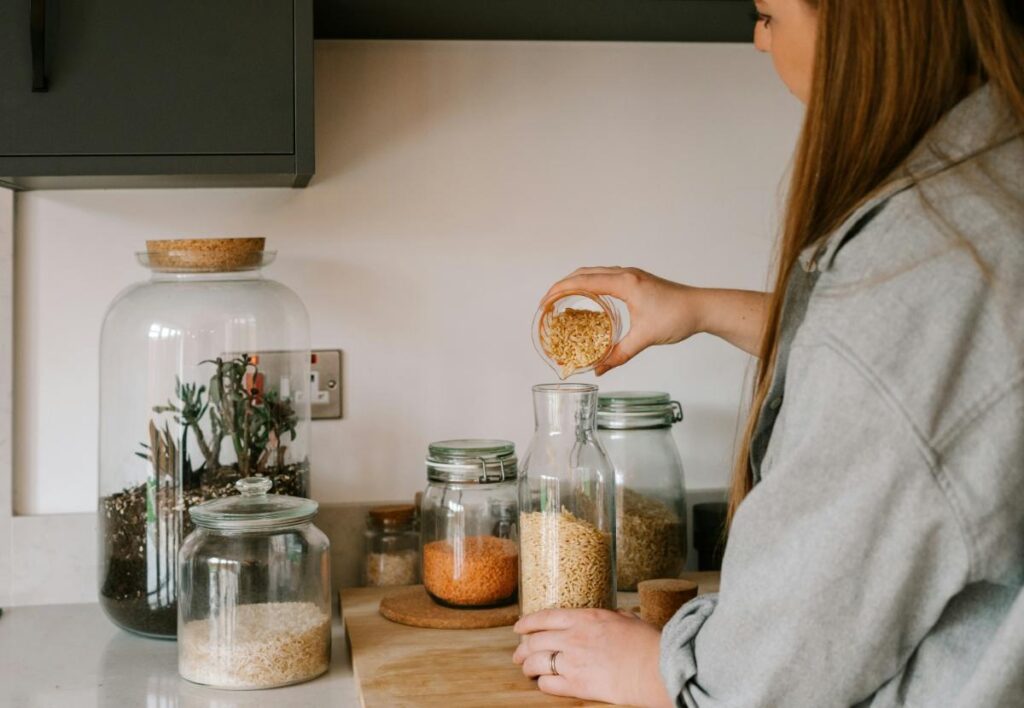
Beyond fats, a pantry that supports actual cooking — nuts, seeds, dried beans, whole grains, vinegars, spices, a few canned tomatoes — does most of the work in pulling a family away from packaged meals. The shift isn’t about deprivation; it’s about having ingredients on hand that can become five different dinners instead of one. For households eating low-carb, there’s a low-carb pantry staples list that walks through the basics in detail.
Grow Something, Even If It’s Just a Pot of Basil
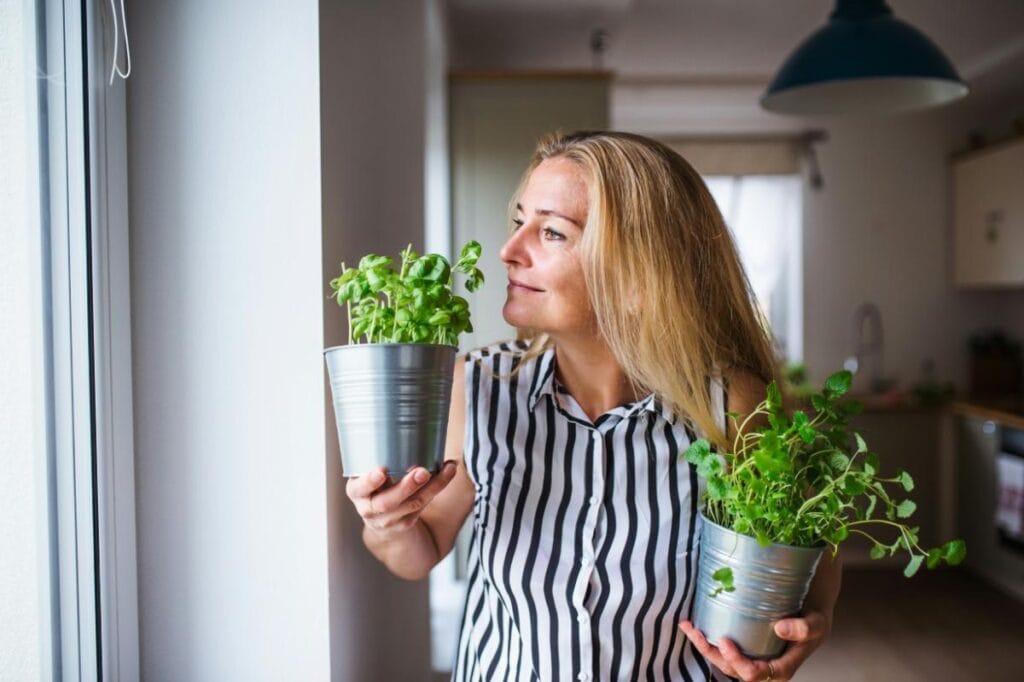
The next step on the spectrum is producing a little bit of food yourself. The bar here is intentionally low. A single pot of basil on a windowsill replaces the $4 plastic clamshell at the grocery store every two weeks. A patio tomato plant in a five-gallon container can yield 10 to 20 pounds of fruit over the summer. None of this turns a family into homesteaders, but it changes the relationship between the kitchen and the food in it. The National Gardening Association has reported that more than 43 percent of American households grow some kind of food at home — a figure that has stayed elevated since the pandemic and reflects how mainstream small-scale food growing has become.
Families with kids tend to find this tier especially rewarding because the math is forgiving and the lessons are immediate. A child who has watched a cherry tomato ripen on the vine will eat a cherry tomato. Herbs are the obvious starter: basil, parsley, chives, and mint all tolerate beginner mistakes and live happily in containers. From there, families with even a small sunny patch can step up to lettuce, peppers, cucumbers, zucchini, and bush beans. The yield from a 4-by-8-foot raised bed is enough to meaningfully dent a weekly produce bill without overtaking anyone’s weekends.
Skills That Make Any Kitchen More Self-Sufficient
Independent of how much food a family grows or how stocked the pantry is, a handful of cooking skills do most of the work in reducing reliance on takeout, meal kits, and ultra-processed shortcuts. Three are worth singling out.
Cooking from a Short List of Ingredients
The families who eat at home most consistently are usually the ones who have ten to fifteen meals they can make without looking at a recipe. Building that repertoire takes time, but it transforms the weekly grocery run from a guessing game into a predictable list. Glue Sticks and Gumdrops’ rundown of simple low-carb meals is one place to start for households looking to thin out the packaged-food habit.
Batch Cooking and Strategic Leftovers
A pot of soup, a sheet pan of roasted vegetables, or a slow-cooker shredded chicken on Sunday can carry a family through several weekday lunches and at least one dinner. The economics are striking: a $15 whole chicken and a head of cabbage will outproduce three drive-thru runs and feed more people. Batch cooking also makes the pantry pay off, because it draws on staples instead of last-minute grocery trips.
Putting Food Up Before It Goes Bad
Freezing herbs in olive oil, blanching and freezing summer vegetables, drying surplus garden tomatoes — these are the small preservation skills that close the loop between growing food and eating it. None of them requires special equipment. A freezer, a few mason jars, and an hour on a Saturday is usually enough to prevent the most common kind of household food waste, which is the bag of spinach that liquefies in the back of the crisper.
Making It Stick Without Burning Out
The trap with anything labeled “self-sufficient” is the urge to take on too much at once. A family that tries to start a garden, switch every cooking oil, batch cook all their dinners, and learn canning in the same month tends to abandon the whole project by week three. The version that sticks tends to look the opposite: one small change, then another, layered over a year or two. Stock the pantry better. Plant one thing. Cook one new meal from scratch. Freeze a soup. The point is not to opt out of grocery stores; it’s to be less at their mercy when prices climb.
None of this requires acres or a chest freezer in the basement. It requires paying attention to the food a family already eats and asking, honestly, where the easiest wins are. For most households, the answer is closer to the kitchen counter than the back forty — and that’s a perfectly good place to start.