

Image Source :unsplash
Yes, commercial flying is significantly safer than driving. According to the National Safety Council, your lifetime odds of dying in a car crash are about 1 in 101. For air travel, that number drops to 1 in 11,000.
Plane crashes make headlines because they are rare and involve many people at once. Car accidents happen far more often and kill over 38,000 Americans each year, but they rarely receive the same attention. So, if you’ve ever wondered is flying really safer than driving, the short answer is yes, by a wide margin.
What makes this comparison more interesting is that it’s not just about raw crash statistics. It’s about human perception, infrastructure, regulations, and what “safe” actually means in practice. The rest of the article breaks all of that down.
The Numbers That Actually Matter
Safety comparisons typically use two measures:
- Deaths per miles traveled
- Deaths per journey
Per mile, flying is far safer than driving. In the U.S., commercial flights have fewer than 0.07 deaths per billion passenger miles. Driving causes about 7.3 deaths. This makes driving over 100 times more dangerous.
Per journey, the gap narrows. A quick drive feels relatively safe because the overall risk is low. But over long distances, the risk of driving adds up much faster than the risk of flying.
A simple rule: the farther you travel, the safer flying becomes compared to driving.
Why Commercial Flying is Built to Be Safe
Commercial aviation is so safe because safety is built into every part of the system — not because of luck.
Redundant systems: Every critical function on a modern aircraft has a backup. Hydraulics, engines, avionics — engineers design specifically for failure scenarios, then build around them.
Pilot standards: U.S. commercial pilots must hold an Airline Transport Pilot (ATP) certificate with a minimum of 1,500 flight hours. First Officers train for hundreds of additional hours in simulators before they ever sit at the controls with passengers aboard.
Mandated maintenance: Aircraft maintenance is federally required and meticulously documented. A car can roll down the highway with a warning light on for months. A commercial aircraft cannot.
Continuous oversight: Every commercial flight is tracked and monitored by Air Traffic Control from gate to gate. No equivalent system exists for drivers on a highway.
Under 49 U.S. Code § 44701, the FAA has a statutory obligation to promote the safe operation of civil aircraft. That legal responsibility supports a strict safety system for aviation that has no true equivalent in road travel.
Driving Is Riskier Than It Feels
Driving feels safe because it feels familiar. That familiarity is part of the problem.
The leading causes of road deaths in the U.S. are predictable:
- Distracted driving
- Speeding
- Alcohol impairment
- Skipping seatbelts.
Every one of those is a human behavioral failure — and on public roads, humans are largely left to regulate themselves.
On the road, you can glance at your phone at a red light. You can push 90 mph on a quiet highway. You can skip the seatbelt on a two-mile trip. None of those choices are available in commercial aviation. Pilots do not have that freedom.
Under Federal Aviation Regulations, specifically 14 CFR Part 121, airlines must follow strict procedures that are standardized, monitored, and enforced.
The standards applied to a flight crew have no equivalent for the average driver. That’s not a small difference. It’s a core reason why the fatality rates are this far apart.
Reasons People Fear Flying More Anyway
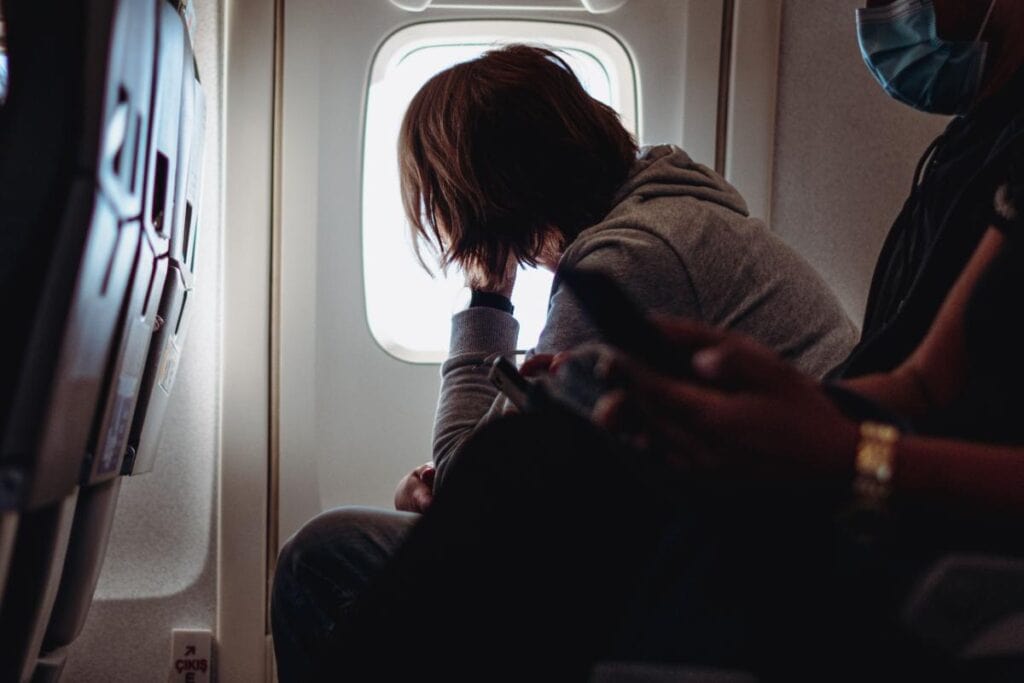
Image Source: pexels
Most people fear flying more than driving. This isn’t irrational. It’s just how the brain handles risk.
When you drive, you feel in control, so the activity seems safer. Psychologists call this the “control illusion.” It is the tendency to believe something is less dangerous simply because you are the one in control, even when the facts say otherwise.
Plane crashes also trigger what’s known as “availability bias.” A dramatic crash covered by every major outlet for a week lodges in memory as something that happens more often than it does. Car accidents feel routine and distant by comparison.
Fear of flying is common. Fear of the daily commute is not. The risk profile is the opposite of that emotional response.
Conclusion
Commercial air travel is among the safest forms of transportation humans have ever built. Driving is statistically one of the most dangerous things most people do on a regular basis.
Cars are necessary for everyday life, but the bigger risk is usually on the road, not in the air. Many people fear turbulence during a flight yet drive home distracted without thinking twice.
The facts are simple: flying is safer than most people feel, and driving is riskier than most people realize.
Key Takeaways
- Air travel is safer than driving because your odds of dying in a car accident are about 1 in 101.
- If you are planning to travel farther, then flying becomes a safer option compared to driving.
- Under 49 U.S. Code § 44701, the FAA is legally required to ensure the safe operation of civil aircraft.
- Pilots don’t get the freedom one gets in driving a car, as the aviation rules are strict.
- Control illusion is a tendency to believe something is less dangerous simply because you are the one in control.