
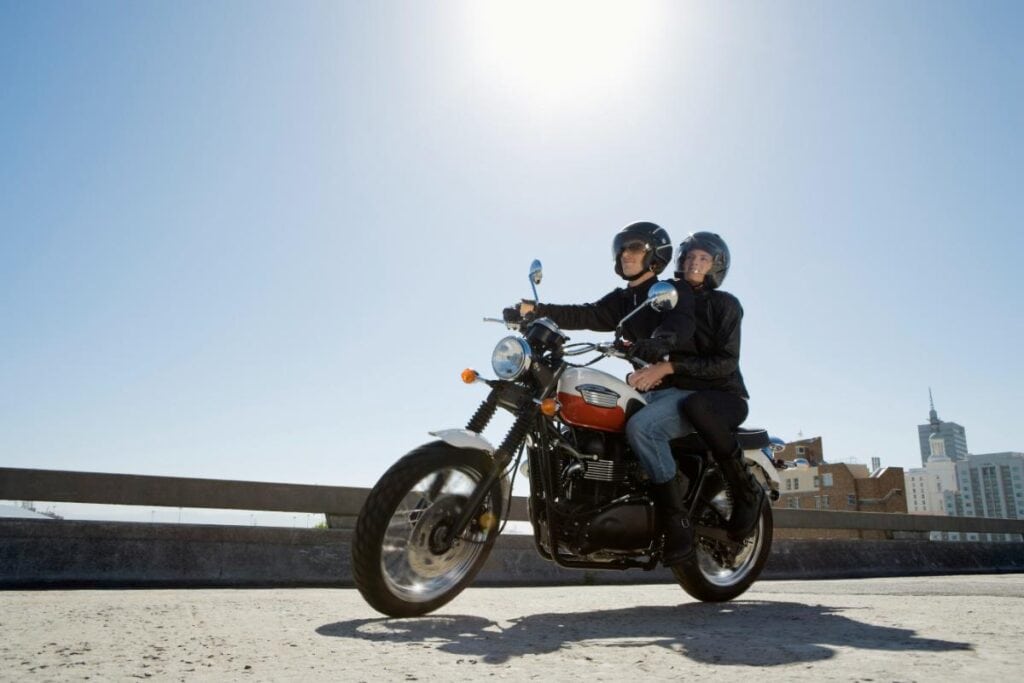
To ride safely, motorcyclists must wear full protective gear, perform pre-ride checks, and stay alert in traffic at all times. These habits directly reduce the risk of injury and death on every ride.
Riders who consistently apply proven safety tips cut their exposure to these risks significantly. The road does not forgive mistakes at speed. Preparation, awareness, and the right gear are what separate riders who stay safe from those who do not.
What Gear Does a Rider Actually Need?
A properly fitted helmet is the single most critical piece of equipment a rider can wear. Studies consistently show helmets reduce the risk of fatal head injury by nearly 37 percent.
Beyond the helmet, riders need abrasion-resistant jackets, gloves, boots that cover the ankle, and reinforced pants. Road rash from even a low-speed fall can cause permanent injury without the right layers.
High-visibility gear matters too. Wearing bright or reflective clothing makes riders more detectable to drivers, particularly in low-light conditions and at intersections.
How Pre-Ride Checks Prevent Breakdowns and Crashes
Every ride should begin with a quick T-CLOCS inspection: tires, controls, lights, oil, chassis, and stands. This check takes under five minutes and can catch a problem before it becomes a crash.
Tire pressure deserves particular attention. Under-inflated tires reduce handling precision and increase blowout risk, especially at highway speeds or when cornering hard.
Brakes, turn signals, and mirrors should all be confirmed functional before pulling out. A burned-out brake light is invisible to the rider but leaves them dangerously unseen by traffic behind.
Riding Defensively in Traffic
Motorcycles disappear into drivers’ blind spots with ease. Positioning toward the edge of a lane rather than the center keeps you more visible and gives you an escape path.
Maintaining a larger following distance than a car driver does is essential. A rear-end collision from a distracted driver is far more survivable with extra buffer space ahead.
Intersections are where most fatal motorcycle crashes occur. Scanning for vehicles about to turn left across your path and covering the brake is a habit that saves lives.
Speed, Curves, and the Limits of Control
Excessive speed is a factor in nearly a third of all motorcycle fatalities. The faster a rider travels, the less time they have to identify and react to hazards ahead.
Curves require particular care. Entering too fast and then braking mid-corner is one of the most common causes of single-vehicle motorcycle crashes.
Speeding remains the top behavioral factor in motorcycle deaths nationwide. Matching speed to road conditions and sight lines dramatically cuts rider risk.
Conclusion
Safe motorcycle riding comes down to consistency in preparation, awareness, and decision-making. The right gear, regular bike checks, and defensive riding habits work together to significantly reduce the risk of serious injury. By understanding the limits of speed and staying alert in traffic, riders can better protect themselves every time they take the road.
Motorcycling will always carry inherent risks, but many of the most dangerous situations are preventable. Riders who apply these safety practices on every trip are far more likely to avoid accidents and ride with confidence. Making safety a priority is not just about following guidelines—it is about ensuring every ride ends safely.
Key Takeaways
• Always wear a DOT-approved helmet and full protective gear; no ride is short enough to skip it.
• Run a T-CLOCS pre-ride check before every trip to catch mechanical issues early.
• Ride defensively: stay visible, keep extra following distance, and treat every intersection as a potential threat.
• Excessive speed is involved in roughly one-third of all motorcycle fatalities; match your pace to the road and your sight lines.