
Many Australian children receive a basic vision screening when they begin school, but this one-time check can give a false sense of security. While these screenings are well-intended, they are not designed to detect more complex vision problems that may affect learning, behaviour, or overall development.
A comprehensive children’s eye test conducted by a qualified optometrist provides a full assessment of a child’s visual function and eye health. For parents seeking expert care, Eye Concepts Kids Optometrist offers tailored eye testing for children, with age-appropriate methods and bulk-billed consultations available.
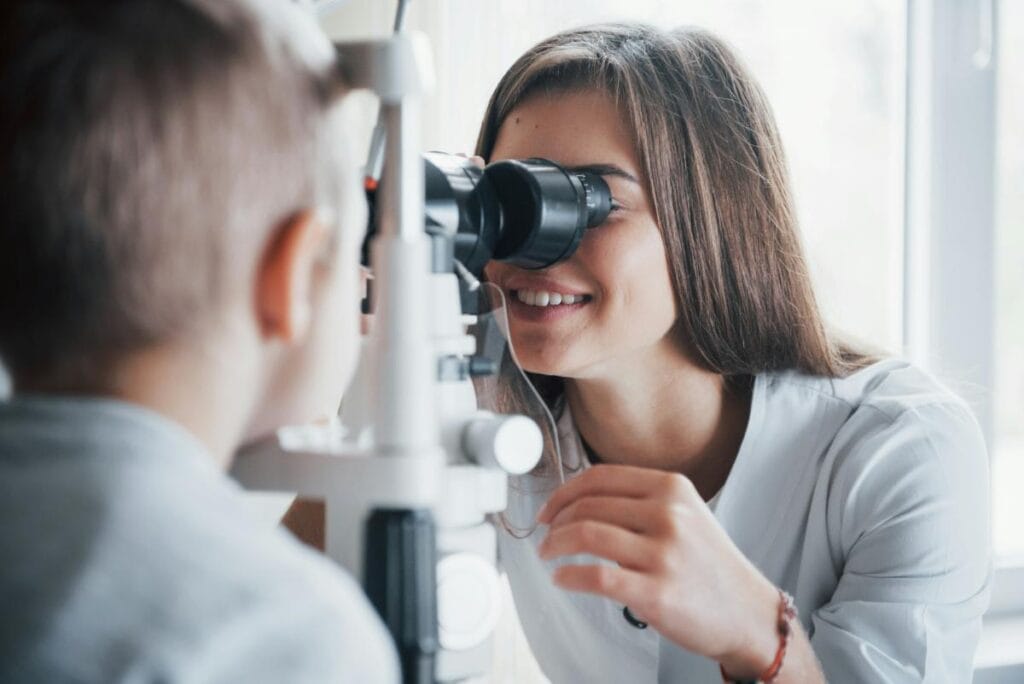
Understanding the Purpose of School Vision Screenings
School-based vision screenings are conducted in many Australian primary schools, typically around the ages of five or six. These checks are usually performed by trained nurses or screeners using standardised charts, such as the Snellen or LogMAR chart.
The main goal is to assess distance visual acuity — how clearly a child can see objects from a distance. Children who do not meet the required threshold are referred to an optometrist for further testing. However, these screenings only evaluate a narrow aspect of vision. They do not examine:
- How the eyes work together (binocular vision)
- Eye focusing ability or stamina
- Tracking skills for reading
- Eye health or internal eye structures
As a result, many children who pass these screenings may still have functional vision problems that affect reading, writing, concentration, and performance in the classroom.
What a Comprehensive Eye Examination Involves
Unlike a basic school screening, a comprehensive eye exam offers a full diagnostic assessment by a registered optometrist. These examinations are more detailed and tailored to detect subtle visual inefficiencies that can impact learning and development.
A full exam includes:
- Visual acuity testing for both distance and near tasks
- Binocular vision assessment to evaluate how the eyes work together
- Focusing and tracking evaluations, including accommodation and convergence
- Depth perception and contrast sensitivity testing
- Internal and external eye health checks, using tools like ophthalmoscopy and slit lamp examination
- Prescription determination, if corrective lenses are needed
These tests are designed to be age-appropriate, and most optometrists use engaging methods to keep children relaxed and involved throughout the session.
Optometrists recommend that all children undergo their first comprehensive eye examination around age 4–5, regardless of whether any symptoms are present. Functional vision issues often go unnoticed by parents and teachers, as children may not realise their vision is different from others.
Key Differences Between Screening and Full Eye Exams
To clearly understand the functional gap between school screenings and full eye exams, the table below outlines their differences:
School Screening vs Comprehensive Eye Exam
| Feature | School Screening | Comprehensive Eye Exam |
| Distance Vision | ✅ Yes | ✅ Yes |
| Binocular Vision (eye teaming) | ❌ No | ✅ Yes |
| Focusing & Eye Tracking | ❌ No | ✅ Yes |
| Eye Health Evaluation | ❌ No | ✅ Yes |
| Conducted By | Nurse/Trained Screener | Qualified Optometrist |
| Referral Required | If failed | Not required |
| Frequency | Once, at school entry | Every 2 years (or as advised) |
This comparison shows that school screenings focus purely on acuity, while comprehensive eye exams evaluate how the visual system functions as a whole.
Why Functional Vision Matters for Learning
Vision is more than just clarity. A child may see the board clearly yet struggle to track words across a page, shift focus between near and far tasks, or maintain visual comfort through a school day.
Undetected vision issues can result in:
- Difficulty reading, particularly small print or extended paragraphs
- Reversals in letters or numbers, common with poor tracking
- Frustration or avoidance behaviours such as skipping reading tasks
- Misdiagnosis of learning or attention disorders
- Delayed academic progress, especially in literacy development
Children rarely complain about these issues because they assume their visual experience is normal. Teachers and parents may notice signs such as squinting, rubbing eyes, short attention span, or complaints of tiredness during schoolwork.
Functional vision affects how children engage with the learning environment, making early detection essential for long-term success.
What the Experts Say: Optometrists’ Perspective
Australian optometrists continue to raise concerns about the limitations of school-based vision screenings. Research and clinical experience show that many children who pass these screenings still present with undiagnosed binocular vision problems, focusing difficulties, or subtle eye muscle imbalances that can affect their ability to learn.
According to Optometry Australia’s guidance, a full eye examination is recommended before children start school, even in the absence of symptoms. Many visual problems do not show up in day-to-day observation, and children may not have the awareness or language to express what they’re experiencing.
Eye care professionals emphasise that early intervention improves long-term outcomes, both academically and developmentally. Regular eye exams, starting from age four or five, help identify problems early—before they affect reading fluency, classroom engagement, or confidence.
When and How to Book a Comprehensive Eye Test
Organising a full eye exam is straightforward and accessible to most families in Australia. These are the steps parents and carers should follow:
- Book with a local optometrist: No GP referral is required
- Choose a provider experienced with children: Clinics such as Eye Concepts specialise in child-friendly testing environments
- Bring background notes: If a teacher or childcare provider has raised concerns, share these with the optometrist
- Allow around 30–45 minutes: The session is non-invasive and designed to be comfortable for children
- Costs: Most comprehensive eye tests for children are bulk-billed through Medicare, with no out-of-pocket expense
Early testing is especially important if there’s a family history of eye conditions, or if a child shows signs of visual strain, reduced attention, or difficulty with reading or writing tasks.
Key Takeaways for Parents and Teachers
- School vision screenings are limited in scope, assessing only distance vision
- Comprehensive eye exams are essential to detect focusing, tracking, and binocular vision problems
- Functional vision plays a crucial role in reading, concentration, and classroom performance
- Regular check-ups from age four or five help ensure a child enters school with strong visual foundations
- Educators should monitor for signs of visual difficulty and encourage parents to seek professional assessment if concerns arise
- Optometrists are accessible without referral and most child eye exams are covered by Medicare
Parents and teachers are the first line of defence when it comes to a child’s visual health. Noticing the subtle signs and acting early can prevent unnecessary learning challenges later.
Ensure Every Child Sees Their Best
Strong vision lays the foundation for confident, engaged learning. Parents and teachers must not rely solely on school screenings to judge a child’s visual health. For full peace of mind:
- Book a comprehensive eye exam with a qualified optometrist before school starts
- Share any concerns with the optometrist—no referral needed
- Encourage other parents and educators to learn the signs of vision problems
- Visit your local provider, or choose a specialist like Eye Concepts for tailored, bulk-billed assessments