
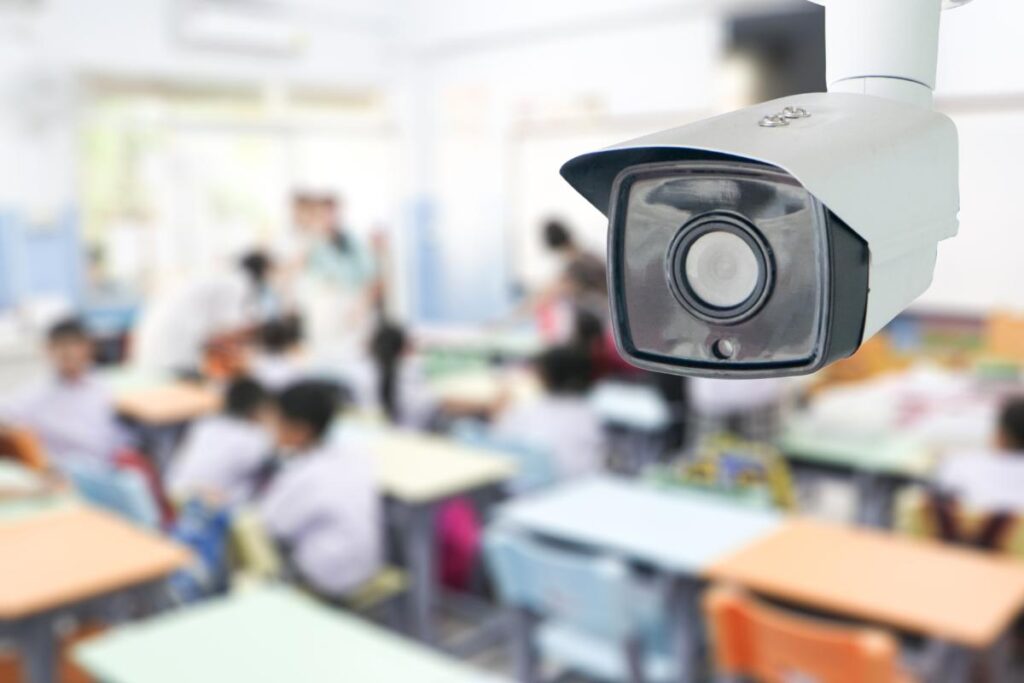
For most parents, dropping their children off at school should come with peace of mind. Schools are places for learning, friendships, and personal growth. However, in recent years, concerns about campus safety have become part of the broader conversation about education.
Because of this, schools across the world have been investing in new technology designed to keep students safe. These tools range from security cameras and access control systems to artificial intelligence that can detect potential threats in real time.
The numbers show just how common these technologies have become. According to the National Center for Education Statistics, 93 percent of public schools now use security cameras to monitor their campuses, making surveillance one of the most widely adopted safety measures in education.
Controlled access to school buildings is even more common. Nearly 97 percent of schools restrict building entry during school hours and require visitors to sign in, helping administrators track who enters campus facilities.
Students themselves notice these safety measures. About 86 percent of students aged 12 to 18 report seeing security cameras at their schools, reflecting how visible these systems have become in everyday school life.
These technologies are part of a larger shift in how schools approach safety. Instead of relying only on security guards or manual supervision, modern campuses use smart systems that monitor activity, control access to buildings, and help staff respond quickly when emergencies occur.
For parents, understanding how these systems work can provide reassurance. While no safety solution can eliminate risk completely, modern technology is helping schools detect problems earlier and protect students more effectively.
Why School Safety Technology Is Growing
School security measures have evolved significantly over the past two decades. In the past, many schools relied on relatively simple safety practices such as locked doors, hall monitors, and visitor sign in sheets.
Those methods still exist today, but they are now combined with technology that provides much greater visibility across a campus.
Several factors have contributed to this shift.
First, schools are larger and more complex than they used to be. A single campus may include multiple buildings, sports fields, parking lots, and playgrounds. Monitoring these areas manually is extremely difficult.
Second, communities now expect schools to be prepared for a wide range of emergencies. These include not only security threats but also medical incidents, severe weather, and unauthorized visitors.
Finally, technology itself has improved dramatically. Modern systems can analyze large amounts of information quickly, allowing school staff to respond faster when something unusual happens.
The goal is not to turn schools into heavily guarded facilities. Instead, technology is used to quietly monitor the environment and alert staff when help may be needed.
Security Cameras and Campus Visibility
School Security Camera System are one of the most recognizable school safety tools today.
In earlier years, cameras mainly served as recording devices. If something happened, administrators could review the footage afterward to understand what occurred.
Today’s systems do much more than record video.
Modern cameras can monitor entrances, hallways, playgrounds, and parking areas in real time. They help staff keep an eye on large areas without needing dozens of employees watching every corner of the campus.
One major advantage of cameras is deterrence. Research shows that visible surveillance can discourage bullying, vandalism, and unauthorized entry because individuals know their actions are being recorded.
Cameras also provide valuable evidence when incidents occur. If a dispute happens between students or property is damaged, administrators can review the footage to understand what happened and respond appropriately.
Parents often find comfort in knowing that schools can quickly investigate incidents and maintain a record of important events.
Access Control and Safer School Entrances
Another important part of modern school safety is controlling who can enter the building.
Many schools now use electronic access control systems to manage entry points. These systems can include key cards for staff, secure door locks, and visitor management software.
When a visitor arrives at a school, they usually check in at the front office. Staff can verify their identity and issue a temporary badge before allowing them to enter the building.
This process may seem simple, but it plays a crucial role in preventing unauthorized individuals from entering campus facilities.
Access control systems also help schools monitor activity during the day. If a door is opened unexpectedly or someone attempts to enter a restricted area, administrators can receive an alert.
By combining controlled entry with camera monitoring, schools create a layered safety approach that makes it easier to identify potential risks.
Artificial Intelligence and Smart Monitoring
One of the biggest technological developments in school security is the use of artificial intelligence.
Artificial intelligence systems can analyze video footage automatically and identify patterns that might indicate a safety issue. For example, AI software can detect fights, large crowds forming suddenly, or someone entering an area where they are not allowed.
If the system detects unusual activity, it sends an alert to school administrators or security staff.
This technology is especially helpful because it can analyze video continuously. Humans can only watch a few screens at a time, but AI systems can monitor hundreds of camera feeds simultaneously.
Some school districts are already experimenting with AI tools that can detect weapons or identify medical emergencies through video monitoring.
These systems do not replace human decision making. Instead, they act as an extra layer of awareness that helps staff respond more quickly.
Emergency Communication and Rapid Response
Technology also plays a vital role in how schools communicate during emergencies.
Many campuses now use digital communication platforms that allow administrators to send alerts instantly to teachers and staff.
For example, if a lockdown is required, administrators can notify classrooms immediately through mobile apps or internal communication systems.
Teachers can receive instructions about how to respond, and emergency services can be contacted quickly.
Some systems even allow staff members to trigger emergency alerts directly from their phones or computers.
These tools ensure that information spreads quickly across the campus, which is critical during time sensitive situations.
Monitoring Behavior and Environmental Risks
Beyond cameras and access control, some schools are adopting additional technologies to monitor environmental and behavioral conditions.
For instance, certain sensors can detect vaping in bathrooms or identify abnormal air quality. When these sensors detect unusual activity, administrators receive alerts so they can investigate.
Other systems can analyze noise levels or crowd movement patterns in hallways.
These technologies are still relatively new, but they demonstrate how schools are expanding their safety strategies to detect problems earlier.
Protecting Student Privacy
As school safety technology becomes more advanced, privacy concerns naturally arise.
Parents often wonder how schools balance security with students’ rights to privacy.
Most school surveillance systems focus on public spaces such as hallways, entrances, and outdoor areas. Cameras are generally not installed in private locations such as restrooms or locker rooms.
In addition, many modern systems analyze activity rather than identifying specific individuals. This approach helps detect potential risks without tracking students personally.
Schools also typically follow strict policies regarding how video footage is stored and who can access it.
Transparency and communication with parents are essential in maintaining trust when safety technologies are introduced.
The Human Element in School Safety
While technology plays a major role in school safety today, experts emphasize that human relationships remain the most important factor.
Teachers, counselors, administrators, and school resource officers all contribute to creating a safe environment for students.
Technology can detect potential problems, but people are still responsible for interpreting alerts and responding appropriately.
In many schools, safety teams review incidents and coordinate responses with local law enforcement when necessary.
The most effective school safety strategies combine smart technology with strong community relationships.
What This Means for Parents
For parents, the growing presence of safety technology may feel unfamiliar at first. Cameras, sensors, and AI systems might sound intimidating.
However, the goal of these tools is simple. They are designed to help schools notice problems quickly and respond before situations escalate.
In many ways, these technologies function quietly in the background. Most students go through their entire school day without ever thinking about them.
Instead of replacing human supervision, technology supports educators by giving them better information and faster awareness.
As schools continue to evolve, safety technology will likely remain a key part of protecting students while allowing them to learn in a positive environment.
Frequently Asked Questions
Why do schools use security cameras?
Security cameras help schools monitor entrances, hallways, and other common areas. They discourage misconduct, help staff respond quickly to incidents, and provide evidence when problems occur.
Are security cameras allowed in schools?
Yes. Cameras are generally legal as long as they follow privacy guidelines. Schools typically avoid placing cameras in private areas such as bathrooms or locker rooms and focus on monitoring public spaces.
Do cameras actually improve school safety?
Cameras can reduce bullying, vandalism, and unauthorized access because individuals are aware that their actions are recorded. They also allow administrators to review incidents and respond more effectively.
Is artificial intelligence being used in schools?
Some schools now use AI software to analyze security camera footage and detect potential threats or emergencies. These systems can alert staff when unusual activity occurs.
How do schools protect student privacy?
Most systems monitor public spaces only and limit who can access recorded footage. Many technologies focus on detecting behavior patterns rather than identifying individual students.
Final Thoughts
School safety in 2026 is shaped by a combination of technology, planning, and human care. Security cameras, controlled entry systems, artificial intelligence, and emergency communication tools are helping schools respond to risks faster than ever before.
While these technologies continue to evolve, their purpose remains simple. They exist to support teachers, protect students, and give parents confidence that their children are learning in a safe environment.
As schools adopt smarter safety tools, they are creating campuses that are not only more secure but also better prepared for the challenges of the future.