
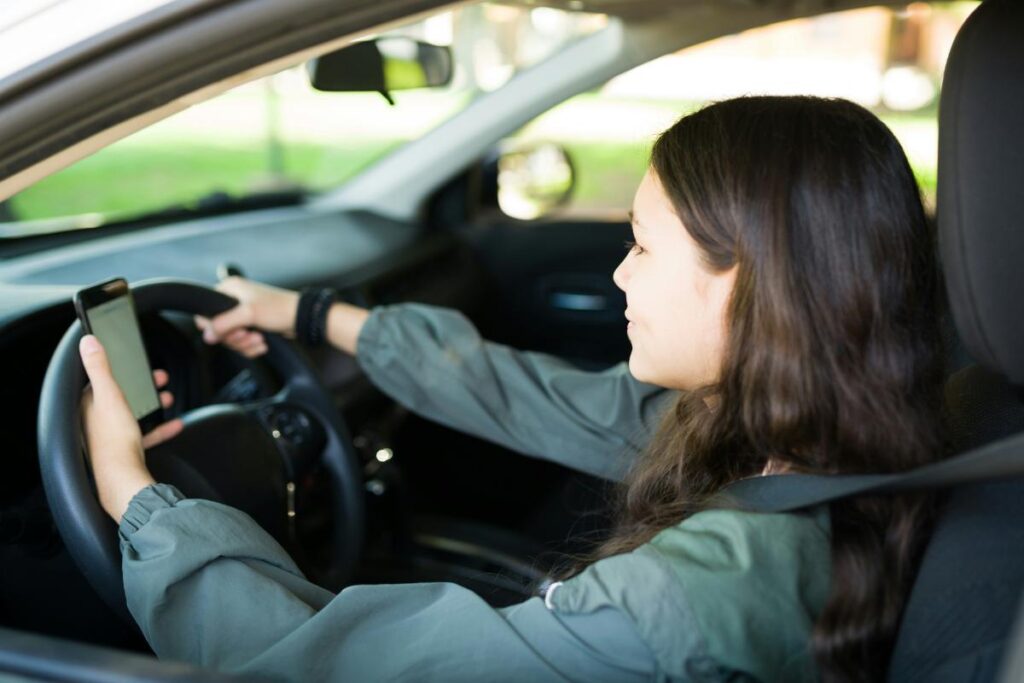
Austin’s roads are known for heavy traffic and unpredictable commutes. Whether you’re merging onto I-35 or navigating MoPac, there’s very little room for error. As the city continues to grow, so does the number of drivers who are distracted by their phones instead of focusing on the road.
It only takes a few seconds of looking away to cause a serious crash. A quick glance at a notification can lead to a rear-end collision or a dangerous sideswipe. What makes these accidents especially frustrating is that they are often completely preventable.
Holding distracted drivers accountable requires a clear understanding of how these cases are handled under local and state law. Proving that distraction played a role in the crash is an important step toward recovering damages and moving forward.
Reviewing Texas’s State-Wide Texting Ban
For many years, Texas had a patchwork of local ordinances that made it difficult for drivers to know what was legal between cities. That changed with the implementation of a comprehensive state-wide ban on texting while driving. This statute makes it illegal to read, write, or send electronic messages while operating a motor vehicle on any public roadway.
The law is even stricter in designated school zones, where any handheld use of a mobile device is strictly prohibited. These zones are high-risk areas where children are present and reaction times must be instantaneous for safety. Violating these rules is not just a traffic infraction; it is a sign of reckless disregard for the most vulnerable members of our community.
Law enforcement officers in Austin are increasingly vigilant about spotting drivers with phones in their hands during their shifts. While the ban is a step in the right direction, it still requires active enforcement and legal accountability to be effective. Understanding these specific statutes is essential for building a strong foundation for any future and professional liability claim.
Subpoenaing Cell Phone Records for Objective Proof
One of the most effective ways to prove a driver was using their phone is through a formal subpoena of records. These documents provide a timestamped log of data usage, outgoing calls, and text messages sent or received. This objective data serves as a digital fingerprint that links the driver’s behavior directly to the moment of the impact.
Insurance companies often try to argue that their client was paying attention, but these records tell a different story. If a text was sent thirty seconds before a crash, it creates a powerful narrative of negligence that is difficult to dispute. It moves the case from a subjective argument to one based on hard and unalterable digital evidence.
Securing this data requires a proactive legal approach, as service providers do not keep these records indefinitely for the public. An attorney must act quickly to ensure the evidence is preserved before it is deleted or overwritten by the system. This technical investigation is a vital part of uncovering the truth behind a seemingly accidental road collision.
Challenging the Hands-Free Fallacy and Cognitive Risk
There is a common misconception that using Bluetooth or voice-to-text features completely removes the risk of a serious accident. While these “hands-free” options keep your fingers on the wheel, they do nothing to address the cognitive distraction of a conversation. The brain still has to process the information, which slows down reaction times to hazards.
Studies have shown that a driver engaged in a conversation is often blind to up to fifty percent of their surroundings. They might be looking at the road, but their mind is essentially elsewhere, leading to a state of inattentional blindness. This mental detachment is just as dangerous as physically holding a device while navigating through heavy city traffic.
Proving cognitive distraction is more difficult than proving manual use, but it is a critical factor in many serious crashes. It highlights the fact that driving is a task that requires one hundred percent of a person’s mental resources. Challenging the hands-free defense is essential for exposing the full scope of a driver’s negligence today.
Scene Documentation and Witness Canvassing
Summarizing the path to justice reveals that the moments after a crash are critical for protecting your long-term rights. If you suspect the other driver was on their phone, it is vital to mention this to the officer immediately. Having this suspicion noted in the official report provides a starting point for the future forensic investigation.
You should also look for witnesses who might have seen the driver looking down or holding a device before the collision. Their independent accounts add a layer of credibility that can be invaluable during negotiations with the insurance carrier. Documenting these details while they are fresh is the best way to ensure the truth is eventually told.
Ultimately, holding phone-using drivers accountable is about demanding a higher standard of safety for everyone in the Austin area. By taking a disciplined approach to evidence and the law, you can secure the resources you need to heal. High standards in litigation lead to safer roads and a more responsible community for all local residents.