
Parents across Michigan often wonder when the right time is to start structured learning. The answer surprises many: much sooner than kindergarten. A child’s brain builds over one million neural connections each second in the earliest years of life. By age five, close to 90% of that brain growth has already happened. This tight window turns quality childcare into something far bigger than a safe place to spend the day. It is where children first learn how to think, speak, and relate to others.
How Structured Routines Build Cognitive Skills
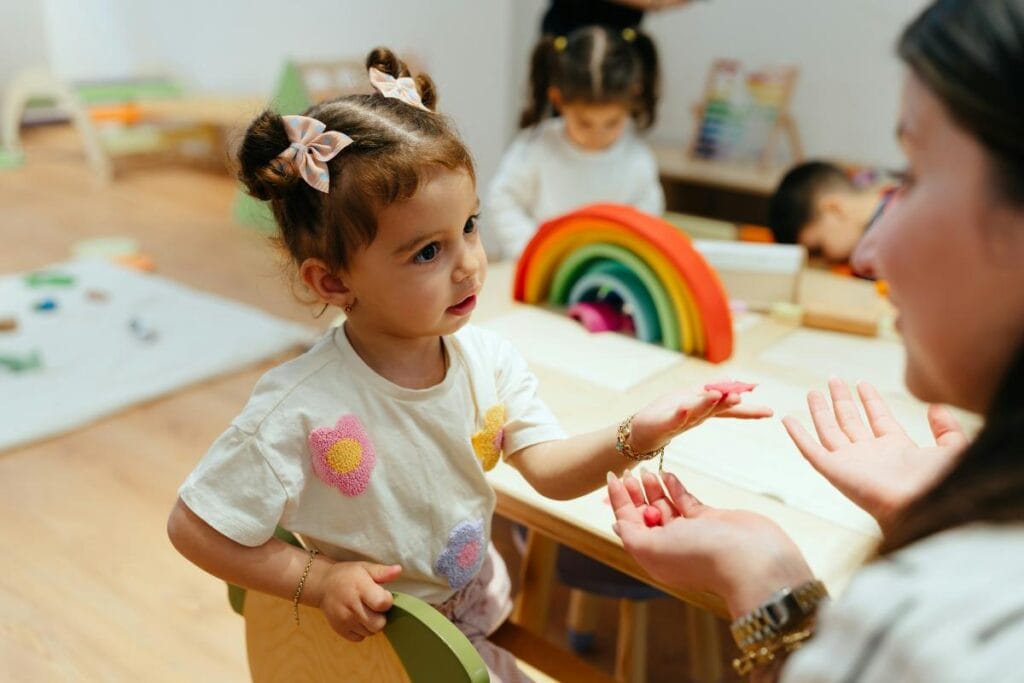
Predictable schedules give young children a sense of order. A daily rhythm of circle time, free play, meals, and rest teaches them to recognize sequences and handle transitions with less stress. These repeated patterns, over weeks and months, sharpen memory, lengthen attention spans, and strengthen the ability to follow multi-step directions.
What makes childcare especially effective is the group setting. At home, routines exist, but they rarely involve a room full of same-age peers. Sitting through a group activity, waiting for a turn, or tidying up after a project all require executive function, the cognitive skill most closely linked to later academic performance. As such, families looking for child care in Southfield should seek programs that pair structured learning blocks with open-ended play. The best providers adjust the pace to each child, offering enough challenge to spark growth without creating unnecessary pressure.
Social and Emotional Growth Through Group Settings
Group classrooms put toddlers and preschoolers in daily situations where they must share, negotiate, and cooperate. Through those small, repeated interactions, children begin developing emotional regulation and empathy, two capacities that books and screens alone cannot teach.
A disagreement over a toy or a spot on the rug is completely normal at this age. Skilled caregivers use those moments to model calm problem-solving rather than simply taking the object away. Children who practice working through minor conflicts during their childcare years tend to bring those same skills into kindergarten and the grades that follow.
Spending part of the day with trusted adults outside the family also helps children grow comfortable in unfamiliar settings. That sense of security carries real weight once formal schooling begins, where they need to depend on teachers and classmates for guidance throughout the day.
Language and Communication Gains
A childcare program is also where toddlers start building their communication skills, primarily because of the environment they’re in. Children absorb new words most quickly through back-and-forth conversation, not passive listening. Caregivers draw kids into storytelling, singing, and descriptive play, activities that grow vocabulary faster than a single adult at home can typically manage on their own. Hearing different speech patterns from peers adds another layer, helping children recognize varied rhythms and expressions in everyday language.
Physical Development and Motor Skills
Early learning covers far more than letters and numbers. Strong childcare programs thread both gross and fine motor activities into every part of the daily schedule.
Running, climbing, and jumping outdoors build coordination, balance, and overall strength. Indoors, tasks like cutting with safety scissors, stacking blocks, and threading beads develop fine motor control. These physical gains connect directly to later school tasks, including handwriting, keyboard use, and managing classroom supplies.
Preparing Children for Kindergarten Readiness
Kindergarten readiness isn’t just about being able to recite the alphabet. Teachers expect new students to listen with focus, follow basic instructions, grip a pencil properly, and get along with peers. Childcare programs give children daily practice in every one of these areas.
Children who attend a structured early learning program are more likely to finish high school and continue into higher education or career training. Starting early does more than solve a scheduling need for working parents. It builds an academic and social base that stays with a child well beyond preschool.
Wrapping Up
Few investments carry as much long-term value as quality childcare during a child’s first five years. Structured routines, peer interaction, language-rich environments, and hands-on physical activity all work together to shape how young children think, communicate, and connect with others. Now that Michigan families have access to high-quality programs, the earlier that foundation is set, the more prepared a child will be for every classroom ahead.